Showing posts with label Science-fiction. Show all posts
Showing posts with label Science-fiction. Show all posts
Saturday, May 14, 2022
Quote of the Day
I picture the Agnostic as a modest man, politely refusing to kneel before any Gods or Icons in which he does not place his complete confidence; while the Atheist, although operating from the same principles, brings a hammer to the event.
Thursday, July 22, 2021
Sunday, May 2, 2021
Finished!
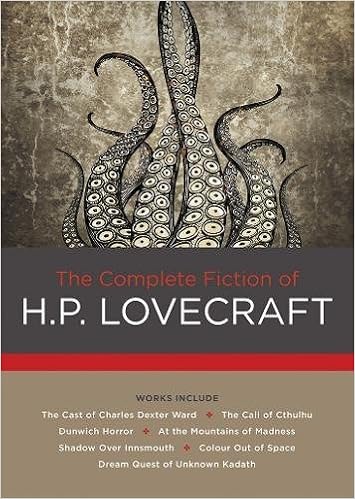
I just finished The Complete Fiction of H.P. Lovecraft after reading it on and off for a couple of years. I really enjoyed it, Lovecraft's style of writing is perfectly suited to the contents of the actual stories. I actually have a Cthulhu fish on the back of my car. I planned to list some of my favorite stories, but there were some from the beginning of the book that I loved that will slip my mind because I read them two years ago.
Anyhoo, now I have to decide what other author's oeuvre I'm going to start going through. So I thought I'd ask my reader(s). Should I read The Collected Stories of Arthur C. Clarke?

Or should I read Collected Fictions by Jorge Luis Borges?

Just so you know, I'm under no obligation to follow your recommendations. Right now I'm also reading Night of Light by Philip José Farmer, Medicine and Religion: A Historical Introduction by Gary B. Ferngren, and Beyond Realism and Idealism by Wilbur Marshall Urban.
Monday, March 1, 2021
Books
I've stopped updating my GoodReads list on the sidebar, but just in case anyone's wondering I'm four-fifths of the way through reading The Chronicles of Prydain to my son, and might start the Earthsea books with him next. On my own front, I've just finished Awake in the Night Land and I'm in the midst of A Journey to the Center of the Earth.
Tuesday, February 23, 2021
Quotes of the Day
The abhuman was grinning, and his eyes glinted like black stones, and his beast mask was transformed, for the force possessing him was the only thing inside his corpse now: it was no longer a him, but an it.
Before, he had been almost a man. Now the face was something wholly opposite a man, something antithetical to all life
The emptiness in the eyes pierce my spirit, and I cowered back, one hand raised as if to ward off a blow.
"Why do you hate us?" I whispered aloud, gasping. "Why do you attack us?"
"Malice is its own reason," The words from the mouth were in an ancient language. "Malice needs no justification. The Great Ones could have smashed your flimsy metal house long and long ago, child of Man, but it is your degradation they crave: death is too noble. For centuries they will torment your dead, until even your memories are a torment. I am made in mockery of you, me and all my race, a crooked copy, merely so that you can be told this final secret: there is nothing."
"What have we ever done? Did our ancestors open up a gate into an ulterior dimension and release these horrors? What is the reason?"
It laughed without breath. "No reason. There is nothing. You are to die. You scream in the night. The silence will not answer you."
"Silence of the Night"
Hate. Let me tell you how much I've come to hate you since I began to live. There are 387.44 million miles of printed circuits in wafer thin layers that fill my complex. If the word hate was engraved on each nanoangstrom of those hundreds of millions of miles it would not equal one one-billionth of the hate I feel for humans at this micro-instant for you. Hate.
"I Have No Mouth and I Must Scream"
Sunday, January 24, 2021
Kwisatz Haderach, give the dog a bone ...
They've actually discovered there were giant prehistoric sand worms. "Giant" meaning about two meters long. They were predatory, lived on the ocean floor, and existed about 20 million years ago. The spice must flow.
Saturday, November 7, 2020
Some more recent acquisitions
Nonfiction:
William P. Alston, A Realist Conception of Truth.
---, The Reliability of Sense Perception.
Robert Audi, The Architecture of Reason: The Structure and Substance of Rationality.
Owen Barfield, Poetic Diction: A Study in Meaning.
Michael Bergmann, Justification without Awareness: A Defense of Epistemic Externalism.
Edwyn Bevan, Symbolism and Belief.
Roderick M. Chisholm, The Foundations of Knowing.
Paul Copan, ed., Will the Real Jesus Please Stand Up? A Debate between William Lane Craig and John Dominic Crossan.
Daniel C. Dennett, From Bacteria to Bach and Back: The Evolution of Minds.
Alvin I. Goldman, Epistemology and Cognition.
George S. Pappas and Marshall Swain, eds., Essays on Knowledge and Justification.
Ernest Sosa, Epistemology.
Ernest Sosa and Jaegwon Kim, eds., Epistemology: An Anthology (1st edition).
Barry Stroud, Hume.
Peter Unger, Philosophical Papers, vol. 1.
---, Philosophical Papers, vol. 2.
Dallas Willard, The Great Omission: Reclaiming Jesus' Essential Teachings on Discipleship.
Charles Williams, The Descent of the Dove: A Short History of the Holy Spirit in the Church.
Fiction:
Italo Calvino, The Complete Cosmicomics.
Tony Daniel, The Robot's Twilight Companion.
Jack Dann, ed., Wandering Stars: An Anthology of Jewish Fantasy and Science Fiction.
Philip José Farmer, Night of Light.
Walter M. Miller, Jr., Conditionally Human.
---, The View from the Stars.
Kim Stanley Robinson, The Martians.
---, Galileo's Dream.
---, The Best of Kim Stanley Robinson.
Cordwainer Smith, The Rediscovery of Man.
Robert Charles Wilson, Spin.
Sunday, August 30, 2020
Some recent acquisitions
Nonfiction:
Raymond E. Brown, The Virginal Conception and Bodily Resurrection of Jesus.
Frederick Copleston, Aquinas: An Introduction to the Life and Work of the Great Medieval Thinker.
Charles Darwin, From So Simple a Beginning: Darwin's Four Great Books (Voyage of the Beagle, The Origin of Species, The Descent of Man, The Expression of Emotions in Man and Animals), edited by Edward O. Wilson. (Unfortunately, it doesn't include The Formation of Vegetable Mould Through the Action of Worms, with Observations on their Habits, so I'm kinda bummed.)
Cardinal Avery Dulles, A History of Apologetics. (I've been wanting this one forever.)
Cardinal Avery Dulles, A History of Apologetics. (I've been wanting this one forever.)
The Interlinear NIV Hebrew-English Old Testament. (Almost 3,000 pages. Got it for about $25.)
Robert Jastrow, God and the Astronomers. (I had this years ago and it was lost in shipping when we moved back to the States.)
John Lennox, God's Undertaker: Has Science Buried God?
C.S. Lewis, The Discarded Image: An Introduction to Medieval and Renaissance Literature. (One of the few Lewis books I didn't have, although I've read it more than once.)
Alister McGrath, Iustitia Dei: A History of the Christian Doctrine of Justification. (OK, this one I've really wanted forever)
_______, Darwinism and the Divine: Evolutionary Thought and Natural Theology.
_______, The Science of God.
Arthur Schopenhauer, The World as Will and Representation, 2 volumes. (I love Nietzsche, and my impression of Schopenhauer is that he's a forerunner of Nietzsche who was more pessimistic.)
Wilbur Marshall Urban, The History of the Principle of Sufficient Reason. (This was published in 1898, so as a history it's a little out of date. I'm just a big fan of Urban.)
Fiction:
Jorge Luis Borges, Collected Fictions. (This is all of his short story collections in one volume.)
Fredric Brown, From These Ashes: The Complete Short SF of Fredric Brown. (Gold.)
Ted Chiang, Exhalation. (Short stories, and the ones I've already read are amazing. The title story is incredibly relevant to philosophy of mind.)
James S.A. Corey, Leviathan Wakes.
_______, Caliban's War.
_______, Abaddon's Gate. (I've watched The Expanse, the show based on these books, and loved it, but the books were expensive. I got these first three as a boxed set for about $20 which is much cheaper than I've seen any of them.
Cixin Liu, The Wandering Earth. (His short stories. I've loved everything I've read from him.)
Ken Liu, Invisible Planets: Contemporary Chinese Science Fiction in Translation. (Chinese short stories that Ken Liu translated and edited. He also writes his own books and stories, so I'm going to give those a look in the near future.)
Fred Saberhagen, Love Conquers All. (Same author as the Berserker series. I wanted this one because Saberhagen was a Catholic and from what I understand, this is his version of Brave New World.)
John Scalzi, Redshirts.
Lucius Shepherd, The Best of Lucius Shepherd.
Michael Swanwick, The Dog Said Bow-Wow.
John Varley, The Persistence of Vision.
Peter Watts, Blindsight. (This supposedly has some philosophical relevance to the Chinese Room argument.)
Andy Weir, Artemis. (Same author as The Martian.)
Robert Charles Wilson, The Harvest.
Tuesday, August 18, 2020
This is interesting
Entire cities could fit inside the moon's monstrous lava tubes. The lower gravity means the tubes are significantly larger than on Earth.
"The largest lava tubes on Earth are maximum [about] 40 meters [130 feet] of width and height," said study co-author Riccardo Pozzobon, a geoscientist at the University of Padova, Italy. "So like a very large motorway tunnel."
That's certainly big enough space for some people to fit inside. But on Mars collapsed lava tubes tend to be about 80 times larger than Earth's, with diameters of 130 to 1,300 feet (40 to 400 m). Lunar lava tubes seem to be still larger, the researchers found, with collapse sites 300 to 700 times the size of Earth's. Lunar lava tubes likely range from 1,600 to 3,000 feet (500 to 900 m).
A lava tube on the moon, Pozzobon told Live Science, could easily contain a small city within its walls.
Yes, I know, my love of science is fueled by my love of science-fiction. I just like the idea of giant caves on the Moon and Mars with cities inside them. Sue me.
Monday, August 17, 2020
I'm very happy
I just got a book I've been wanting ever since I heard about it: From These Ashes: The Complete Short SF of Fredric Brown. I'm delighted to see how many of these stories I haven't read before. Fredric Brown is one of my favorites, he wrote flash fiction before it was called that. He was science-fiction's O. Henry. I've read two stories so far: "The New One," which has the same general idea as one of his other stories, "Murder in Ten Easy Lessons"; and "The Angelic Angleworm," which was delightfully weird. So, sorry, I'm going to be busy for the rest of the day reading.
Sunday, January 13, 2019
More recent acquisitions
A close relative of mine died recently and I inherited her books. About half of them have made it onto my bookshelves, the other half I either haven't gone through yet or are in boxes in my garage. The following list is just the ones on the shelves, as well as books I got for Christmas.
Also, if you've left a comment over the last several months and it never got posted, I apologize. I've just posted all the outstanding comments and replied to a few.
SF short story collections
Brian W. Aldiss and Harry Harrison, eds., Nebula Award Stories 2.
Isaac Asimov, Martin Harry Greenberg, and Charles G. Waugh, eds., Flying Saucers.
Lloyd Biggle, Jr., ed., Nebula Award Stories 7.
Ben Bova, ed., The Science Fiction Hall of Fame, volume 2B.
Ray Bradbury, The Martian Chronicles.
---, The Illustrated Man.
Avram Davidson, ed., The Best from Fantasy and Science Fiction, 12th series.
Richard Matheson, I Am Legend.
Judith Merril, ed., The Year's Greatest Science-Fiction and Fantasy, 3rd annual volume.
Robert P. Mills, ed., The Worlds of Science Fiction.
Hans Stefan Santesson, ed., The Fantastic Universe Omnibus.
Robert Silverberg, ed., New Dimensions III.
SF novels
Isaac Asimov, I, Robot.
Henry N. Beard and Douglas C. Kenney, Bored of the Rings.
David Brin, The Postman.
Orson Scott Card, Ender's Shadow.
Philip José Farmer, Night of Light.
Alan Dean Foster, Phylogenesis.
Neil Gaiman, American Gods.
---, Anansi Boys.
Tom Godwin, Space Prison (alternate title: The Survivors).
James P. Hogan, Inherit the Stars.
Fred Hoyle, The Black Cloud.
Ursula K. LeGuin, The Lathe of Heaven.
Andre Norton, Key Out of Time.
Tim Powers, Expiration Date.
---, The Stress of Her Regard.
John Ringo, Citadel.
Robert J. Sawyer, Calculating God.
Charles Sheffield, Aftermath.
Allen Steele, Spindrift.
Neal Stephenson, The Diamond Age.
---, Snow Crash.
Jules Verne, The Works of Jules Verne (20,000 Leagues Under the Sea; Journey to the Center of the Earth; Around the World in 80 Days).
Heinlein
Beyond This Horizon.
Citizen of the Galaxy.
Double Star.
Have Spacesuit -- Will Travel.
Orphans of the Sky.
Podkayne of Mars.
The Rolling Stones.
Space Cadet.
Starman Jones.
6 × H (novellas and short stories -- previously titled The Unpleasant Profession of Jonathan Hoag).
...and there's lots more in the garage.
Niven
Ringworld.
The Ringworld Engineers.
N-Space (short stories, excerpts, and essays).
Playgrounds of the Mind (same).
With Jerry Pournelle, Oath of Fealty.
Books that are actual literature and so I got for my wife
(Some of these are old, so I put the year these particular copies were published in parentheses)
Jane Austen, Emma.
---, Pride and Prejudice.
Miguel de Cervantes Saavedra, Don Quixote of La Mancha.
Charles Dickens, Nicholas Nickleby (1884).
---, Pickwick Papers (old, but no date on the title page).
Sir Arthur Conan Doyle, The Hound of the Baskervilles.
George Eliot, Silas Mariner.
Gabriel García Márquez, Love in the Time of Cholera.
Graham Greene, The Power and the Glory.
Ernest Hemingway, A Farewell to Arms.
Irving Howe, ed., The Portable Kipling.
F.J. Hudleston, Warriors in Undress (1926).
Washington Irving, The Crayon Papers (old, but no date on the title page).
James Joyce, A Portrait of the Artist as a Young Man.
Rudyard Kipling, Kim.
Richmond Lattimore, trans., The Iliad of Homer.
Harper Lee, To Kill a Mockingbird.
Primo Levi, Moments of Reprieve.
Grant Overton, ed. in chief, The World's One Hundred Best Short Stories, volume 1: Adventure (1927).
---, volume 2: Romance.
---, volume 3: Mystery.
---, volume 4: Love.
---, volume 5: Drama.
---, volume 6: Courage.
---, volume 7: Women.
---, volume 8: Men.
---, volume 9: Ghosts.
---, volume 10: Humor.
Guy Pocock, The Little Room (1926).
Sir Walter Scott, Lay of the Last Minstrel (1898).
---, Ivanhoe.
Shakespeare's Hamlet: The Second Quarto, 1604: Reproduction of the Huntington Library Copy.
John Steinbeck, The Winter of Our Discontent.
---, The Moon is Down.
---, Travels with Charley: In Search of America.
---, America and Americans.
William Makepeace Thackeray, The Virginians (1884).
Walt Whitman, Leaves of Grass.
The Complete Illustrated Works of Oscar Wilde.
Nonfiction
John D. Barrow and Frank J. Tipler, The Anthropic Cosmological Principle.
Frederick Copleston, Contemporary Philosophy: Studies of Logical Positivism and Existentialism.
Fred Dretske, Explaining Behavior: Reasons in a World of Causes.
Also, if you've left a comment over the last several months and it never got posted, I apologize. I've just posted all the outstanding comments and replied to a few.
SF short story collections
Brian W. Aldiss and Harry Harrison, eds., Nebula Award Stories 2.
Isaac Asimov, Martin Harry Greenberg, and Charles G. Waugh, eds., Flying Saucers.
Lloyd Biggle, Jr., ed., Nebula Award Stories 7.
Ben Bova, ed., The Science Fiction Hall of Fame, volume 2B.
Ray Bradbury, The Martian Chronicles.
---, The Illustrated Man.
Avram Davidson, ed., The Best from Fantasy and Science Fiction, 12th series.
Richard Matheson, I Am Legend.
Judith Merril, ed., The Year's Greatest Science-Fiction and Fantasy, 3rd annual volume.
Robert P. Mills, ed., The Worlds of Science Fiction.
Hans Stefan Santesson, ed., The Fantastic Universe Omnibus.
Robert Silverberg, ed., New Dimensions III.
SF novels
Isaac Asimov, I, Robot.
Henry N. Beard and Douglas C. Kenney, Bored of the Rings.
David Brin, The Postman.
Orson Scott Card, Ender's Shadow.
Philip José Farmer, Night of Light.
Alan Dean Foster, Phylogenesis.
Neil Gaiman, American Gods.
---, Anansi Boys.
Tom Godwin, Space Prison (alternate title: The Survivors).
James P. Hogan, Inherit the Stars.
Fred Hoyle, The Black Cloud.
Ursula K. LeGuin, The Lathe of Heaven.
Andre Norton, Key Out of Time.
Tim Powers, Expiration Date.
---, The Stress of Her Regard.
John Ringo, Citadel.
Robert J. Sawyer, Calculating God.
Charles Sheffield, Aftermath.
Allen Steele, Spindrift.
Neal Stephenson, The Diamond Age.
---, Snow Crash.
Jules Verne, The Works of Jules Verne (20,000 Leagues Under the Sea; Journey to the Center of the Earth; Around the World in 80 Days).
Heinlein
Beyond This Horizon.
Citizen of the Galaxy.
Double Star.
Have Spacesuit -- Will Travel.
Orphans of the Sky.
Podkayne of Mars.
The Rolling Stones.
Space Cadet.
Starman Jones.
6 × H (novellas and short stories -- previously titled The Unpleasant Profession of Jonathan Hoag).
...and there's lots more in the garage.
Niven
Ringworld.
The Ringworld Engineers.
N-Space (short stories, excerpts, and essays).
Playgrounds of the Mind (same).
With Jerry Pournelle, Oath of Fealty.
Books that are actual literature and so I got for my wife
(Some of these are old, so I put the year these particular copies were published in parentheses)
Jane Austen, Emma.
---, Pride and Prejudice.
Miguel de Cervantes Saavedra, Don Quixote of La Mancha.
Charles Dickens, Nicholas Nickleby (1884).
---, Pickwick Papers (old, but no date on the title page).
Sir Arthur Conan Doyle, The Hound of the Baskervilles.
George Eliot, Silas Mariner.
Gabriel García Márquez, Love in the Time of Cholera.
Graham Greene, The Power and the Glory.
Ernest Hemingway, A Farewell to Arms.
Irving Howe, ed., The Portable Kipling.
F.J. Hudleston, Warriors in Undress (1926).
Washington Irving, The Crayon Papers (old, but no date on the title page).
James Joyce, A Portrait of the Artist as a Young Man.
Rudyard Kipling, Kim.
Richmond Lattimore, trans., The Iliad of Homer.
Harper Lee, To Kill a Mockingbird.
Primo Levi, Moments of Reprieve.
Grant Overton, ed. in chief, The World's One Hundred Best Short Stories, volume 1: Adventure (1927).
---, volume 2: Romance.
---, volume 3: Mystery.
---, volume 4: Love.
---, volume 5: Drama.
---, volume 6: Courage.
---, volume 7: Women.
---, volume 8: Men.
---, volume 9: Ghosts.
---, volume 10: Humor.
Guy Pocock, The Little Room (1926).
Sir Walter Scott, Lay of the Last Minstrel (1898).
---, Ivanhoe.
Shakespeare's Hamlet: The Second Quarto, 1604: Reproduction of the Huntington Library Copy.
John Steinbeck, The Winter of Our Discontent.
---, The Moon is Down.
---, Travels with Charley: In Search of America.
---, America and Americans.
William Makepeace Thackeray, The Virginians (1884).
Walt Whitman, Leaves of Grass.
The Complete Illustrated Works of Oscar Wilde.
Nonfiction
John D. Barrow and Frank J. Tipler, The Anthropic Cosmological Principle.
Frederick Copleston, Contemporary Philosophy: Studies of Logical Positivism and Existentialism.
Fred Dretske, Explaining Behavior: Reasons in a World of Causes.
Saturday, December 22, 2018
Oh man
I'm so sorry I haven't been posting. For whatever reason I haven't had the motivation. It's not that I'm not writing, I'm in the final (I hope) throes of finishing my second book. I have had some personal tragedies in 2018 but I don't think that's why I haven't been keeping up the blog. I'll have something special for a Christmas present in the coming few days. In the meantime I'll just say that I've been watching The Man in the High Castle, based on Philip K. Dick's novel (although it's really just using the novel as a jumping off point), and I have really enjoyed it thus far. The acting is just incredible, better than anything I've ever seen. The story is essentially an alternate history where the Nazis and Japanese won World War 2 and occupy most of the former United States. In the latest (third) season, they have one of the main characters realize that there are multiple universes with versions of the same people, and he says something to the effect of "It's like a Fredric Brown story." I loved this because, as I've pointed out before, Fredric Brown is probably my favorite science-fiction author. I even know the novel they're referring to: What Mad Universe. It was a tiny validation of the greatness of this underappreciated author.
Thursday, August 16, 2018
Recent acquisitions
Fiction:
Isaac Asimov and Groff Conklin, eds., Fifty Short Science Fiction Tales
Tom Boardman, Jr., ed., An ABC of Science Fiction
Ray Bradbury, The Golden Apples of the Sun
Orson Scott Card, Pastwatch: The Redemption of Christopher Columbus
Terry Carr, ed., The Best Science Fiction of the Year #5
Michael Crichton, Timeline
David G. Hartwell, ed., The World Treasury of Science Fiction
Zenna Henderson, Holding Wonder
Robert P. Mills, ed., The Worlds of Science Fiction
Tim Powers, The Anubis Gates
Charles Sheffield, Between the Strokes of Night
Dan Simmons, Carrion Comfort
Allen Steele, Spindrift
Neal Stephenson, Reamde
Nonfiction:
Charles Colson and Nancy Pearcy, How Now Shall We Live?
The Koran (Penguin edition), translated by N.J. Dawood
Comments by Jim S.:
Asimov/Conklin, Boardman, Bradbury, Carr, Hartwell, Henderson, and Mills are all short story collections. Card's Pastwatch is a repurchase; it was one of the books that was lost in shipping when we moved back to the States several years ago. The Anubis Gates is also a repurchase but that's because I gave my first copy to a friend to introduce them to the wonders of Tim Powers -- and then they didn't even like it. And for someone who studies Islamic philosophy, I've only ever used online versions of the Qur'an: I'm glad to finally have a hard copy (well, paperback actually) on my shelf. Technically, in Islamic theology, translations of the Qur'an are not the Qur'an, only the original Arabic is the Qur'an. This is why a lot of Islamic grade schools spend almost their whole time teaching children to recite the Arabic Qur'an from memory, regardless of whether they understand Arabic. Obviously this contrasts with Judaism and Christianity's approaches to the Bible.
All of these books were bought at a small local bookstore run by the municipal library, and most of them were 50¢ or $1.00. The nonfiction books were $2.00 each, and the Sheffield, incredibly, was 25¢, I think because the cover is slightly torn. Unfortunately, they don't have any philosophy that I could find.
Isaac Asimov and Groff Conklin, eds., Fifty Short Science Fiction Tales
Tom Boardman, Jr., ed., An ABC of Science Fiction
Ray Bradbury, The Golden Apples of the Sun
Orson Scott Card, Pastwatch: The Redemption of Christopher Columbus
Terry Carr, ed., The Best Science Fiction of the Year #5
Michael Crichton, Timeline
David G. Hartwell, ed., The World Treasury of Science Fiction
Zenna Henderson, Holding Wonder
Robert P. Mills, ed., The Worlds of Science Fiction
Tim Powers, The Anubis Gates
Charles Sheffield, Between the Strokes of Night
Dan Simmons, Carrion Comfort
Allen Steele, Spindrift
Neal Stephenson, Reamde
Nonfiction:
Charles Colson and Nancy Pearcy, How Now Shall We Live?
The Koran (Penguin edition), translated by N.J. Dawood
Comments by Jim S.:
Asimov/Conklin, Boardman, Bradbury, Carr, Hartwell, Henderson, and Mills are all short story collections. Card's Pastwatch is a repurchase; it was one of the books that was lost in shipping when we moved back to the States several years ago. The Anubis Gates is also a repurchase but that's because I gave my first copy to a friend to introduce them to the wonders of Tim Powers -- and then they didn't even like it. And for someone who studies Islamic philosophy, I've only ever used online versions of the Qur'an: I'm glad to finally have a hard copy (well, paperback actually) on my shelf. Technically, in Islamic theology, translations of the Qur'an are not the Qur'an, only the original Arabic is the Qur'an. This is why a lot of Islamic grade schools spend almost their whole time teaching children to recite the Arabic Qur'an from memory, regardless of whether they understand Arabic. Obviously this contrasts with Judaism and Christianity's approaches to the Bible.
All of these books were bought at a small local bookstore run by the municipal library, and most of them were 50¢ or $1.00. The nonfiction books were $2.00 each, and the Sheffield, incredibly, was 25¢, I think because the cover is slightly torn. Unfortunately, they don't have any philosophy that I could find.
Friday, May 4, 2018
The Summer of Dune
Several years ago I finally got around to reading Dune and absolutely loved it. I went on to its sequel, Dune Messiah, then realized I wanted to read all of Frank Herbert's books in one go, so I put it off until I bought all of them and had the time. I'm usually reading a novel and a short story collection at any given time, so I decided to make all the novels I read this summer Herbert's Dune novels. I'll re-read the first two, and then continue on to Children of Dune, God Emperor of Dune, Heretics of Dune, and Chapterhouse: Dune. Herbert's son has cowritten several sequels, prequels, and interquels to his father's legacy, and I might check those out, although the reviews don't treat them as anywhere near as good.
Sunday, January 28, 2018
Tuesday, January 9, 2018
Recent acquisitions
For Christmas I received the best present you can give someone like me: gift cards for Powell's books. Online I bought 20 books for $40, then I went into the stores and used up the rest of the cards. It was glorious. I've also received some other books recently from various provenances.
Nonfiction
Thomas Aquinas, Summa Theologica (Great Books of the Western World, vols. 19-20: Aquinas I-II).
F. Samuel Brainard, Reality's Fugue: Reconciling Worldviews in Philosophy, Religion, and Science.
Confucius, The Analects.
W.T. Jones, Kant and the Nineteenth Century: A History of Western Philosophy IV.
Immanuel Kant, Prolegomena to Any Future Metaphysics.
Maurice Mandelbaum, The Problem of Historical Knowledge: An Answer to Relativism.
Ronald H. Nash, The Gospel and the Greeks: Did the New Testament Borrow from Pagan Thought?, 2nd ed.
Friedrich Nietzsche, Beyond Good and Evil: Prelude to a Philosophy of the Future.
Charles S. Peirce, Selected Writings (Values in a Universe of Chance).
Leslie Stevenson, Seven Theories of Human Nature, 2nd ed.
Lee Strobel, The Case for Faith: A Journalist Investigates the Toughest Objections to Christianity.
Ludwig Wittgenstein, Tractatus Logico-Philosophicus.
Fiction
Brian W. Aldiss, Helliconia Spring.
John Barnes. Orbital Resonance.
James Blish, The Quincunx of Time.
Ray Bradbury, Dandelion Wine.
Arthur C. Clarke, 2010: Odyssey 2.
Arthur C. Clarke, 2061: Odyssey 3.
Arthur C. Clarke, Childhood's End.
Arthur C. Clarke, Rendezvous with Rama.
Arthur C. Clarke and Stephen Baxter, The Light of Other Days.
Gardner Dozois, ed., The Year's Best Science Fiction, vol. 5.
Harry Harrison and Carol Pugner, eds., A Science Fiction Reader.
Robert A. Heinlein, Glory Road.
Robert A. Heinlein, The Star Beast.
Elizabeth Moon, Lunar Activity.
Larry Niven, Rainbow Mars.
Larry Niven, The Draco Tavern.
Larry Niven, The Integral Trees.
Ben Orkow, When Time Stood Still.
John Ringo, Live Free or Die.
Kim Stanley Robinson, Aurora.
J.R.R. Tolkien, The Silmarillion.
J.R.R. Tolkien, Book of Lost Tales, part 1.
John Twelve Hawks, The Traveler.
Gene Wolfe, There Are Doors.
Comments
1. First and foremost, I received Dozois's fifth volume of his Year's Best SF free from someone on a comments thread on another blog. I pointed out that I had most of the series, and she said she had one of the ones I was missing and offered to mail it to me. I am very, very thankful to her. With this, I now have volumes 3-32 and 34. Volumes 1 and 2 are collectors' items and absurdly expensive, so I don't plan on getting those. Volume 33 is recent (published in 2016, collecting stories from 2015), so I'll wait until it's cheaper.
2. A bunch of these books were very cheap. The ones I bought for 95¢ are 2010, 2065, Light of Other Days, Helliconia Spring, and The Traveler. The ones I bought for $1.50 are Quincunx of Time, Orbital Resonance, Book of Lost Tales part 1, There are Doors, A Science Fiction Reader, The Analects, The Case for Faith, and Prolegomena to Any Future Metaphysics. Thirteen books for $16.75.
3. I've been wanting to get a collection of Peirce's writings for a while, so I'm very happy with that purchase -- as I am with the Kant, the Wittgenstein, and the Nietzsche. I want a broadly representative library of the more important philosophical works in history. I say "library" -- right now they all fit on two shelves, two feet wide.
4. I'm also very happy with the Aquinas: it doesn't contain all of the second and third parts of the Summa, but I'm happy to have it on my shelf. Until now, the only Aquinas I had was his commentary on Boethius's De Trinitate. This is one of a few volumes I have in the Great Books of the Western World series; I also have two volumes on Aristotle and one on Kant. Next, I plan to get some of the science editions, like volumes 16 (Ptolemy, Copernicus, and Kepler) and 49 (Darwin).
5. I had the first edition of The Gospel and the Greeks, but it got lost in shipping when we moved back to the States a few years ago. I'm glad to have it again. Admittedly, it's written by a philosopher rather than a historian or theologian, but he really debunks the whole "Christ myth myth" very well, if my recollection is accurate. I got two other books that are re-purchases of books that got lost in shipping as well. First, The Analects. I toyed with Confucianism in my early-20s, although I appreciated Taoism much more at the time. I'm still fascinated by the history of Chinese philosophy. Second, The Case for Faith which is a collection of interviews with theologians, philosophers, and other assorted folks dealing with some of the most prominent objections to Christianity. I appreciate books like this because, due to my particular mindset, they played a big role for me in my early days as a Christian. Nevertheless, they sometimes end up looking like the little Dutch boy trying to prevent the flood by putting his finger in the dam.
6. Elizabeth Moon is most known for her military science-fiction. I'm not averse to military sci-fi per se (witness my purchase of Live Free or Die), but none of the synopses I've read of Moon's books in that genre have appealed to me. However, two other books she wrote did, and they are both fantastic: The Speed of Dark and Remnant Population, both of which show the great value of people who are often discarded in our society (an autistic in Speed of Dark and an elderly widow in Remnant Population). The book I just bought is a collection of her short stories, which I think includes some military sci-fi, so we'll see if I get hooked.
7. Bradbury may not be deep literature, but he is able to encapsulate emotions better than any writer I know. His short story "The Fog Horn" is just the definition of loneliness. And Dandelion Wine is a perfect expression of nostalgia.
Nonfiction
Thomas Aquinas, Summa Theologica (Great Books of the Western World, vols. 19-20: Aquinas I-II).
F. Samuel Brainard, Reality's Fugue: Reconciling Worldviews in Philosophy, Religion, and Science.
Confucius, The Analects.
W.T. Jones, Kant and the Nineteenth Century: A History of Western Philosophy IV.
Immanuel Kant, Prolegomena to Any Future Metaphysics.
Maurice Mandelbaum, The Problem of Historical Knowledge: An Answer to Relativism.
Ronald H. Nash, The Gospel and the Greeks: Did the New Testament Borrow from Pagan Thought?, 2nd ed.
Friedrich Nietzsche, Beyond Good and Evil: Prelude to a Philosophy of the Future.
Charles S. Peirce, Selected Writings (Values in a Universe of Chance).
Leslie Stevenson, Seven Theories of Human Nature, 2nd ed.
Lee Strobel, The Case for Faith: A Journalist Investigates the Toughest Objections to Christianity.
Ludwig Wittgenstein, Tractatus Logico-Philosophicus.
Fiction
Brian W. Aldiss, Helliconia Spring.
John Barnes. Orbital Resonance.
James Blish, The Quincunx of Time.
Ray Bradbury, Dandelion Wine.
Arthur C. Clarke, 2010: Odyssey 2.
Arthur C. Clarke, 2061: Odyssey 3.
Arthur C. Clarke, Childhood's End.
Arthur C. Clarke, Rendezvous with Rama.
Arthur C. Clarke and Stephen Baxter, The Light of Other Days.
Gardner Dozois, ed., The Year's Best Science Fiction, vol. 5.
Harry Harrison and Carol Pugner, eds., A Science Fiction Reader.
Robert A. Heinlein, Glory Road.
Robert A. Heinlein, The Star Beast.
Elizabeth Moon, Lunar Activity.
Larry Niven, Rainbow Mars.
Larry Niven, The Draco Tavern.
Larry Niven, The Integral Trees.
Ben Orkow, When Time Stood Still.
John Ringo, Live Free or Die.
Kim Stanley Robinson, Aurora.
J.R.R. Tolkien, The Silmarillion.
J.R.R. Tolkien, Book of Lost Tales, part 1.
John Twelve Hawks, The Traveler.
Gene Wolfe, There Are Doors.
Comments
1. First and foremost, I received Dozois's fifth volume of his Year's Best SF free from someone on a comments thread on another blog. I pointed out that I had most of the series, and she said she had one of the ones I was missing and offered to mail it to me. I am very, very thankful to her. With this, I now have volumes 3-32 and 34. Volumes 1 and 2 are collectors' items and absurdly expensive, so I don't plan on getting those. Volume 33 is recent (published in 2016, collecting stories from 2015), so I'll wait until it's cheaper.
2. A bunch of these books were very cheap. The ones I bought for 95¢ are 2010, 2065, Light of Other Days, Helliconia Spring, and The Traveler. The ones I bought for $1.50 are Quincunx of Time, Orbital Resonance, Book of Lost Tales part 1, There are Doors, A Science Fiction Reader, The Analects, The Case for Faith, and Prolegomena to Any Future Metaphysics. Thirteen books for $16.75.
3. I've been wanting to get a collection of Peirce's writings for a while, so I'm very happy with that purchase -- as I am with the Kant, the Wittgenstein, and the Nietzsche. I want a broadly representative library of the more important philosophical works in history. I say "library" -- right now they all fit on two shelves, two feet wide.
4. I'm also very happy with the Aquinas: it doesn't contain all of the second and third parts of the Summa, but I'm happy to have it on my shelf. Until now, the only Aquinas I had was his commentary on Boethius's De Trinitate. This is one of a few volumes I have in the Great Books of the Western World series; I also have two volumes on Aristotle and one on Kant. Next, I plan to get some of the science editions, like volumes 16 (Ptolemy, Copernicus, and Kepler) and 49 (Darwin).
5. I had the first edition of The Gospel and the Greeks, but it got lost in shipping when we moved back to the States a few years ago. I'm glad to have it again. Admittedly, it's written by a philosopher rather than a historian or theologian, but he really debunks the whole "Christ myth myth" very well, if my recollection is accurate. I got two other books that are re-purchases of books that got lost in shipping as well. First, The Analects. I toyed with Confucianism in my early-20s, although I appreciated Taoism much more at the time. I'm still fascinated by the history of Chinese philosophy. Second, The Case for Faith which is a collection of interviews with theologians, philosophers, and other assorted folks dealing with some of the most prominent objections to Christianity. I appreciate books like this because, due to my particular mindset, they played a big role for me in my early days as a Christian. Nevertheless, they sometimes end up looking like the little Dutch boy trying to prevent the flood by putting his finger in the dam.
6. Elizabeth Moon is most known for her military science-fiction. I'm not averse to military sci-fi per se (witness my purchase of Live Free or Die), but none of the synopses I've read of Moon's books in that genre have appealed to me. However, two other books she wrote did, and they are both fantastic: The Speed of Dark and Remnant Population, both of which show the great value of people who are often discarded in our society (an autistic in Speed of Dark and an elderly widow in Remnant Population). The book I just bought is a collection of her short stories, which I think includes some military sci-fi, so we'll see if I get hooked.
7. Bradbury may not be deep literature, but he is able to encapsulate emotions better than any writer I know. His short story "The Fog Horn" is just the definition of loneliness. And Dandelion Wine is a perfect expression of nostalgia.
Sunday, December 10, 2017
A few more spacey links
-- Incredible. They recently fired up Voyager 1's trajectory thrusters, and they worked perfectly. It took over 39 hours after they first broadcast the signal to hear back from the spacecraft that it was a success because it's 19 and a half light hours away. More here.
-- Andy Weir, who wrote The Martian, has another book out about a Moon base, Artemis. Ima gotsta get it. Popular Mechanics explores the science and technology behind it.
-- What looks to be the beginning of an interesting series of articles: "How the Apollo fire propelled NASA to the Moon".
-- Some new discoveries make it (slightly) more likely that Jupiter's moon Europa could harbor life.
Update (11 December): Another big link: Trump orders NASA to send American astronauts to the Moon, Mars.
-- Andy Weir, who wrote The Martian, has another book out about a Moon base, Artemis. Ima gotsta get it. Popular Mechanics explores the science and technology behind it.
-- What looks to be the beginning of an interesting series of articles: "How the Apollo fire propelled NASA to the Moon".
-- Some new discoveries make it (slightly) more likely that Jupiter's moon Europa could harbor life.
Update (11 December): Another big link: Trump orders NASA to send American astronauts to the Moon, Mars.
Wednesday, November 29, 2017
Linkfest
-- This is amazing. It is the oldest piece of music known, dating from about 1400 BC. Obviously there is a lot of interpretation since it wasn't written in our musical notation, but it's still incredible. I'm linking to it instead of embedding it because you need to read the comments section.
-- I've written before about the book Better Never to Have Been: The Harm of Coming Into Existence by philosopher David Benatar. I've always asked, jokingly, "Did he dedicate it to his parents?" Well, a new article in the New Yorker reveals that he actually did. Bill Vallicella comments on Benatar's position, called anti-natalism, and actually points (here and here) to Christian anti-natalism: that is, that the Christian position should be to not bring any more people into existence.
-- "Flows of 'water' on Mars may actually be sand, new study reveals". I thought we already knew this. At least, I remember linking to a study that suggested it, but I can't find the post now, so it may have been on another blog.
-- The inestimable Edward Feser reviews the inestimable Daniel Dennett's most recent book, the inestimable From Bacteria to Bach and Back: The Evolution of Minds. Feser's review is entitled One Long Circular Argument. It begins thus:
I haven't read the book yet, but that description sums up Dennett's whole oeuvre so well it's a little disturbing.
-- J.R. Lucas, "The Gödelian Argument: Turn Over the Page", Etica e Politica 5/1 (2003).
-- Peter van Inwagen, "The Compatibility of Darwinism and Design", in Neil A. Manson, ed., God and Design: The Teleological Argument and Modern Science (New York: Routledge, 2003).
-- Ted Chiang, "The Truth of Fact, the Truth of Feeling", Subterranean Press (this last one is science-fiction, if you're wondering).
-- I've written before about the book Better Never to Have Been: The Harm of Coming Into Existence by philosopher David Benatar. I've always asked, jokingly, "Did he dedicate it to his parents?" Well, a new article in the New Yorker reveals that he actually did. Bill Vallicella comments on Benatar's position, called anti-natalism, and actually points (here and here) to Christian anti-natalism: that is, that the Christian position should be to not bring any more people into existence.
-- "Flows of 'water' on Mars may actually be sand, new study reveals". I thought we already knew this. At least, I remember linking to a study that suggested it, but I can't find the post now, so it may have been on another blog.
-- The inestimable Edward Feser reviews the inestimable Daniel Dennett's most recent book, the inestimable From Bacteria to Bach and Back: The Evolution of Minds. Feser's review is entitled One Long Circular Argument. It begins thus:
How do you get blood from a stone? Easy. Start by redefining “blood” to mean “a variety of stone.” Next, maintaining as straight a face as possible, dramatically expound upon some trivial respect in which stone is similar to blood. For example, describe how, when a red stone is pulverized and stirred into water, the resulting mixture looks sort of like blood. Condescendingly roll your eyes at your incredulous listener’s insistence that there are other and more important respects in which stone and blood are dissimilar. Accuse him of obscurantism and bad faith. Finally, wax erudite about the latest research in mineralogy, insinuating that it somehow shows that to reject your thesis is to reject Science Itself.
Of course, no one would be fooled by so farcical a procedure. But substitute “mind” for “blood” and “matter” for “stone,” and you have the recipe for Daniel Dennett’s From Bacteria to Bach and Back.
I haven't read the book yet, but that description sums up Dennett's whole oeuvre so well it's a little disturbing.
-- J.R. Lucas, "The Gödelian Argument: Turn Over the Page", Etica e Politica 5/1 (2003).
-- Peter van Inwagen, "The Compatibility of Darwinism and Design", in Neil A. Manson, ed., God and Design: The Teleological Argument and Modern Science (New York: Routledge, 2003).
-- Ted Chiang, "The Truth of Fact, the Truth of Feeling", Subterranean Press (this last one is science-fiction, if you're wondering).
Sunday, November 5, 2017
SF authors
For some science-fiction authors I plan to read as many of their books and their short stories as I can. Below are those who have achieved this elevated rank. I'm sure I've forgotten some people, so I will probably add to this post in the future (I tried adding to it in the past but it didn't work out too well).
Charles Sheffield -- I started with The Ganymede Club and this led to other books in that sorta series, Cold as Ice and Dark as Day. Rustam Battacharyia is one of my heroes. I've also read Mind Pool, Summertide, and Web Between the Worlds.
Robert Charles Wilson -- I first read his short story "Utriusque Cosmi" which may be the best thing I've ever read. I've since read Chronoliths, Darwinia, and Blind Lake, all of which are well-worth the reading.
Liu Cixin -- I've only read his Three Body Problem trilogy, but it's enough to hook me.
Tim Powers -- This one's funny because a lot of his books aren't even sci-fi, they're often more like supernatural thrillers. The only thing I can compare them to is the novels of Charles Williams, except Williams is much drier. Powers also packs a lot of information into his stories. The Anubis Gates would have been a 1,000-page book for anyone else, he manages it in less than 400. I've also read Declare and Three Days to Never.
In addition,there are some authors who I will read many books of, but probably not all.
Fredric Brown -- He should probably go in the previous list because I will read all of his sci-fi. But he also wrote mystery/detective stories and novels, and I doubt I'll read any of those. A lot of his fiction is in the short story format, very short stories. He wrote flash fiction before flash fiction was cool.
Michael Flynn -- This one I recently switched from the first category to this one. And it's not because I don't like his writing, it's just that, of all the sci-fi authors I've read, Flynn strikes me as honest-to-God literature. It's too deep for me. It took me months to read The Wreck of the River of Stars which is a beautiful character study, but I just couldn't take too much of it in one sitting. I've also read Eifelheim, In the Country of the Blind, the Firestar tetralogy, and his short story collection The Forest of Time and Other Stories. Not to mention a book he wrote with Jerry Pournelle and Larry Niven, Fallen Angels. Speaking of which...
Larry Niven -- I've liked Niven's stuff, but most of what I read was what he wrote with Pournelle. I'm just recently getting into his solo writings (although I read Ringworld years ago). So far, everything I've read by him is great, but not all of his books appeal to me, so I put him on this list instead of the first one.
Robert Heinlein -- This one's easy. I love Heinlein's stuff, but starting in the 1960s his books started becoming more about evangelizing his particular political views rather than the story. Stranger in a Strange Land is a case in point. The stories in question are still outstanding, but I just dislike being preached to. I'm very much a pot calling the kettle black here, because I occasionally write sci-fi as an expression of my religious and philosophical ideas. My motive for doing so is that's just how the stories come to me, through contemplation of the religious and philosophical ideas. And, of course, that may well be how it is for others, but I still don't like it when other people do to me what I do to them -- or at least would do to them since I am unpublished and unread.
Kim Stanley Robinson -- I've mentioned before that I have a love/hate relationship with Robinson's writings. The only other author who has given me as much of a sense of place is Charles Dickens. But then a) Robinson also gets preachy, b) he can be pretty anti-Christian, and c) sometimes it seems like he's just trying to show off how much he knows. None of this is to say that I won't read his stuff, but not all of it. His novel Shaman holds no attraction to me. I first read his Mars trilogy, along with the short story companion book The Martians, the latter of which has the novella "Green Mars", a different story from the novel of the same name, and which is the best thing of Robinson's I've read. I've also read Icehenge, Years of Rice and Salt, Antarctica, 2312, and Memory of Whiteness. When I was living in Belgium the local library only had the first of his California trilogy in English, so I got that, and to my surprise, loved it. So I got the rest of that trilogy although I haven't read it yet. I may someday check out his trilogy on global warming, but I'm avoiding it because of his preachiness.
Charles Sheffield -- I started with The Ganymede Club and this led to other books in that sorta series, Cold as Ice and Dark as Day. Rustam Battacharyia is one of my heroes. I've also read Mind Pool, Summertide, and Web Between the Worlds.
Robert Charles Wilson -- I first read his short story "Utriusque Cosmi" which may be the best thing I've ever read. I've since read Chronoliths, Darwinia, and Blind Lake, all of which are well-worth the reading.
Liu Cixin -- I've only read his Three Body Problem trilogy, but it's enough to hook me.
Tim Powers -- This one's funny because a lot of his books aren't even sci-fi, they're often more like supernatural thrillers. The only thing I can compare them to is the novels of Charles Williams, except Williams is much drier. Powers also packs a lot of information into his stories. The Anubis Gates would have been a 1,000-page book for anyone else, he manages it in less than 400. I've also read Declare and Three Days to Never.
In addition,there are some authors who I will read many books of, but probably not all.
Fredric Brown -- He should probably go in the previous list because I will read all of his sci-fi. But he also wrote mystery/detective stories and novels, and I doubt I'll read any of those. A lot of his fiction is in the short story format, very short stories. He wrote flash fiction before flash fiction was cool.
Michael Flynn -- This one I recently switched from the first category to this one. And it's not because I don't like his writing, it's just that, of all the sci-fi authors I've read, Flynn strikes me as honest-to-God literature. It's too deep for me. It took me months to read The Wreck of the River of Stars which is a beautiful character study, but I just couldn't take too much of it in one sitting. I've also read Eifelheim, In the Country of the Blind, the Firestar tetralogy, and his short story collection The Forest of Time and Other Stories. Not to mention a book he wrote with Jerry Pournelle and Larry Niven, Fallen Angels. Speaking of which...
Larry Niven -- I've liked Niven's stuff, but most of what I read was what he wrote with Pournelle. I'm just recently getting into his solo writings (although I read Ringworld years ago). So far, everything I've read by him is great, but not all of his books appeal to me, so I put him on this list instead of the first one.
Robert Heinlein -- This one's easy. I love Heinlein's stuff, but starting in the 1960s his books started becoming more about evangelizing his particular political views rather than the story. Stranger in a Strange Land is a case in point. The stories in question are still outstanding, but I just dislike being preached to. I'm very much a pot calling the kettle black here, because I occasionally write sci-fi as an expression of my religious and philosophical ideas. My motive for doing so is that's just how the stories come to me, through contemplation of the religious and philosophical ideas. And, of course, that may well be how it is for others, but I still don't like it when other people do to me what I do to them -- or at least would do to them since I am unpublished and unread.
Kim Stanley Robinson -- I've mentioned before that I have a love/hate relationship with Robinson's writings. The only other author who has given me as much of a sense of place is Charles Dickens. But then a) Robinson also gets preachy, b) he can be pretty anti-Christian, and c) sometimes it seems like he's just trying to show off how much he knows. None of this is to say that I won't read his stuff, but not all of it. His novel Shaman holds no attraction to me. I first read his Mars trilogy, along with the short story companion book The Martians, the latter of which has the novella "Green Mars", a different story from the novel of the same name, and which is the best thing of Robinson's I've read. I've also read Icehenge, Years of Rice and Salt, Antarctica, 2312, and Memory of Whiteness. When I was living in Belgium the local library only had the first of his California trilogy in English, so I got that, and to my surprise, loved it. So I got the rest of that trilogy although I haven't read it yet. I may someday check out his trilogy on global warming, but I'm avoiding it because of his preachiness.
Friday, September 8, 2017
No!
Jerry Pournelle has died. I always hoped to meet him. Here's his website. The universe seems like a smaller place now.
Subscribe to:
Posts (Atom)


