Showing posts with label Alvin Plantinga. Show all posts

Sunday, July 4, 2021

The Evolutionary Argument against Naturalism

My next book is being published in several days. My title was Naturalized Skepticism but the publisher (Bloomsbury Academic) rejected that in favor of The Evolutionary Argument against Naturalism: Context, Exposition, Repercussions. That's a link to the Amazon page where you can read the the preface, chapter 1, and most of chapter 2. Here's a link to the publisher. You can also read some of it on GoogleBooks. And as I mentioned last December, my first book is available in paperback now, so it's much cheaper.


Wednesday, February 17, 2021

The Dennett fish

Daniel Dennett, in his debate with Alvin Plantinga, ended his first presentation with "a little joke". It didn't make it into the published form of the debate for whatever reason -- perhaps the editor's didn't like it or perhaps it didn't play well with the audience. He had published it before, however, in his essay "Natural Freedom" which appeared in Metaphilosophy in 2005. The joke is a play on the Jesus fish. In case you don't know, the Jesus fish is an acronym in Greek. "ἸΧΘΥΣ" is the Greek word for fish. The I stands for Ἰησοῦς (Jesus), the X for Χριστός (Christ), the Θ for Θεοῦ (God), the Y for Υἱός (Son), and the Σ for Σωτήρ (Savior). So ἸΧΘΥΣ stands for "Jesus Christ, God's Son, Savior." 

The early Christians used the fish as a secret symbol to identify themselves to each other when they were being heavily persecuted: one person would draw one arc of the fish, and the other would draw the other arc (if the second person didn't know what to draw, then the first person would know that the second wasn't, or probably wasn't, a Christian). Some contemporary Christians have picked up on this idea, although it's not as anonymous as before, by putting Jesus fish on the backs of their cars, sometimes with "ἸΧΘΥΣ" inside the fish, sometimes with "Jesus" inside it, and sometimes just leaving it empty. This quickly prompted a response in the form of the fish with legs with "Darwin" written inside it. Some Christians countered with a Jesus fish eating a Darwin fish with "Survival of the fittest" written under it, etc. Others picked up on the idea, and now there are numerous fish-like symbols with all kinds of things written in them.

In the debate and earlier article, Dennett decided to make an acronym out of Darwin to copy the origin of the Jesus fish. Instead of Greek he used Latin, and instead of a "w", which doesn't exist in Latin, he used "uu" -- double "u". He came up with Delere Auctorem Rerum Ut Universum Infinitum Noscere and translates it as: "Destroy the Author of things to understand the infinite universe." Now the first thing that struck me, because of my proclivities, is that the universe isn't infinite. This comes from Einstein's general theory of relativity: the universe -- including the dimensions of space -- are expanding outward from a point of zero volume (a singularity). So he fundamentally misunderstands the universe that he says we must destroy God for in order to understand it. But maybe that's just niggling.

The real problem is that first word, delere. I don't know Latin, but everywhere I've looked up that word it doesn't mean destroy, it means delete. And that would make the phrase more sympathetic: we have to delete the concept of God from our sciencing in order to understand the universe. It would be a statement of methodological naturalism, that we should proceed as if God isn't supernaturally altering whatever we're examining. You could make a strong case for that. But that wasn't enough for Dennett. He gave delere an atypical definition in order to say we need to destroy God. Ignoring him isn't enough; doing science without him isn't enough. We need to destroy him.

That doesn't sound like atheism. It sounds like misotheism: hatred of God. I was wondering if there was any philosophy written on this, and I discovered the book Hating God: The Untold Story of Misotheism by Bernard Schweizer. Unfortunately, it's not philosophy, but it still looks pretty interesting. It also makes me think of Faith of the Fatherless: The Psychology of Atheism by Paul Vitz which argues that the most vociferous atheists of the Modern era tended to have deceased, absent, or weak fathers. This isn't an argument against atheism, obviously, it's a psychological study. It just makes me wonder how much of Dennett's apology for naturalism is motivated by hatred of God rather than just disbelief in him.

Update: It reminds me of this quote from War in Heaven by Charles Williams. It's about someone who encounters Jesus without realizing who it is: "...the instant that he spoke became conscious that he actively disliked the stranger, with a hostility that surprised him with its own virulence. It stood out in his inner world as distinctly as the stranger himself in the full sunlight of the outer; and he knew for almost the first time what Manasseh felt in his rage for utter destruction. His fingers twitched to tear the clothes off his enemy and to break and pound him into a mass of flesh and bone, but he knew nothing of that external sign, for his being was absorbed in a more profound lust. It aimed itself in a thrust of passion which should wholly blot the other out of existence."

Monday, September 7, 2020

The Modal Ontological Argument

Arguments for and against the existence of God constitute one of the main topics in philosophy over the last few thousand years. By far, one of the craziest family of arguments is ontological arguments. They claim that the concept of God entails his actual existence. God is, by definition, the supreme being, the greatest conceivable being, the maximally great being, the perfect being, the being greater than which none can be thought. But if our conception of God is that he doesn't exist, he wouldn't be the greatest conceivable being since we could conceive of him existing and hence being even greater. Therefore, God must exist. Right? Anyone? Hello?

Ontological arguments sound like riddles, but some of the greatest intellects throughout history have defended them. Just in the last 100 years we've had Kurt Gödel (inarguably the greatest logician of the 20th century), Norman Malcolm, Alvin Plantinga, and Charles Hartshorne all defending versions of it. The standard objection to ontological arguments, from Kant, is that they treat existence as if it were a property a being could have or fail to have. But a being that failed to have existence wouldn't be a being at all. The recent counterargument is that this would only apply to Descartes's ontological argument, not to those of others, like Anselm's (or, for that matter, Kant's).

The contemporary versions use modal logic. This is basically the logic of possibility and necessity. If it's logically possible for you to do or be something -- say, waking up one morning as a giant cockroach -- then you have the modal property of "possibly existing as a cockroach." The weird thing is that, if it is possible for you to wake up one morning as a cockroach, then this modal property would not itself be a possible property you may or may not have, it would be an actual property. If something is possible, then its possibility is necessary (possible in all possible worlds), and if it's necessary, it's actual. So if it's possible you may wake up as a cockroach, then you actually have the modal property of "possibly existing as a cockroach." This sounds weird but it's a basic premise in modal logic (axiom S5) and as far as I know, it is uncontested in logical and philosophical circles.

So: say God is the maximally great being -- he has all positive properties, has them without limit, and has no negative properties. If this is logically possible, then God exists in at least one possible world. Now say God exists in only one possible world. Then he would lack the modal property of "possibly existing in world 2," and so wouldn't be maximally great. OK, so he has the property of possibly existing in worlds 1 and 2 and that's it. But then he lacks the modal property of "possibly existing in world 3." Now say he has the modal properties of "possibly existing in all possible worlds but one." Then he would lack the modal property of "possibly existing in that one world," and by lacking that modal property, wouldn't be maximally great. So if God exists in one possible world, he exists in all possible worlds. And the real world is a possible world, since if something is actual, it must be possible. Another way to say this is that any maximally great being worth its salt would exist necessarily, not just contingently; and if a necessarily existing being exists in one possible world, it exists in all possible worlds. Here's a rundown.

1. A maximally great being (God) is logically possible.
2. Therefore, a maximally great being exists in at least one possible world.
3. Therefore, a maximally great being exists in all possible worlds (otherwise he wouldn't be maximally great).
4. Therefore, a maximally great being exists in the actual world.
5. Therefore, a maximally great being (still God) exists.

There are some very interesting things about this, each one leading to the next. First, virtually every step in this argument is uncontroversial among logicians and philosophers, including atheists. But, second, there's a way to avoid the conclusion: deny the first premise. Deny that God, a maximally great being, is logically possible. Then God doesn't exist in any possible world. In fact, Plantinga, one of this argument's advocates, explicitly makes this point. Third, this means that God either exists in no possible worlds or all possible worlds. He either can't exist or can't not exist. He's either logically impossible or logically necessary. Fourth, since in order to say that God does not exist we have to say God cannot exist, the atheist bears the burden of proof. They must show that it is logically impossible for God to exist, that a maximally great being entails a logical contradiction. The theist only has to maintain that it's logically possible. But you don't have to prove something is logically possible unless you have a reason to think it may not be.

Naturally, one of the main objections to God is precisely that a maximally great being entails logical contradictions. For example, such a being would be maximally merciful but also maximally just. But these are, allegedly, incompatible since perfect justice would conflict with perfect mercy. Some individual traits are accused of being incoherent: could a maximally powerful (omnipotent) being create a stone so big that even he couldn't move it? If he can't, then there's something he can't do: make that stone. If he can, then there's something he can't do: move that stone. Either way, there's something he can't do and so omnipotence is a chimera. Naturally again, there are plenty of counterarguments and countercounterarguments and countercountercounter . . . . etc. Regardless, the modal ontological argument is fascinating, not least because it makes denying God's existence much more problematic.

Wednesday, August 26, 2020

Contrasts

Today I read two articles critical of Alvin Plantinga's Evolutionary Argument against Naturalism. The first was an exercise in frustration. It took passages in the Bible which say God sent a deceiving spirit or something similar, and use this to argue that the Judeo-Christian God lies. In this case, Judeo-Christian theism gives one a defeater for the belief that their cognitive faculties are reliable just as much as naturalism allegedly does. It was exasperating to read this just because the authors' exegesis was so painfully bad. One of the foundational rules in exegesis -- in exegeting any text, not just the Bible -- is to interpret the unclear in light of the clear. These authors never mention the explicit passages in the Bible that say unequivocally that God does not, will not, and cannot lie. They just superficially accept what they want the text to mean. They go on to suggest that allowing miracles opens the door to chaos, although they condescendingly invite theists to provide some sort of repeatable, predictable evidence of miracles. It was just so incredibly superficial. It reminded me of a fictional conversation between Carl Sagan, Sylvia Plath, and Allen Carpenter in Escape from Hell by Larry Niven and the late great Jerry Pournelle. 

"I'm still getting used to this," Carl said. "Allen, you must have thought about this a lot. How can you justify keeping people in Hell? What gives God the right to demand we worship Him?" 
"Come now," Sylvia protested. "Where does right come from? You're going to judge God? By whose standards? You say yours, but what makes yours any better than anyone else's?" 
"Sylvia--" 
"I mean it, Allen. You two are smarter than almost anyone I ever met, but you sure have awful educations! People have been arguing about this for thousands of years! And you act like you've just thought of the questions." 
"I notice you never answered my question," Carl said. "What gives God the right to demand we worship Him?" 
"I haven't heard any such demand," Sylvia said. Maybe we just need Him, and we're miserable if we don't have Him."

"People have been arguing about this for thousands of years and you act like you've just thought of the questions." That pretty much sums up the article.

Monday, December 24, 2018

The Plantinga/Dennett Debate with captions

This is the actual "debate" between Alvin Plantinga and Daniel Dennett. I put "debate" in quotes because there's not as much back-and-forth as a standard debate. It's just  Plantinga's presentation, Dennett's response, and Plantinga's counter-response. You can listen to it elsewhere online, but since the audio is so bad I went through it and added captions. Because I just care that much. (Also because I play it for my students and they couldn't follow it.) If anyone can figure out what Plantinga says at 9:52 let me know.

These three presentations later comprised the first three (of six) chapters in Science and Religion: Are They Compatible? (OUP) although Dennett changed several aspects of his presentation. Notably, in the book he doesn't include his "little joke" that he closes with (starting at 1:19:27). I guess it didn't play well with the audience and/or publisher. Dennett's interruption of Plantinga didn't make it into the book either (1:28:35 and following). The final three chapters of the book are Dennett's response to Plantinga's last presentation, Plantinga's response to that, and then Dennett's final response.

So this is my present to you. Merry Christmas. What'd you get me?

Thursday, November 9, 2017

Linkfest

-- Here's an interesting (and long) series of quotes by political pundits on their reactions in the lead-up to, in the midst of, and in the aftermath of, the 2016 Presidential election. I couldn't focus on the election because I was still too overwhelmed by the flat-out miracle of the Cubs winning the World Series a few days earlier.

-- Huh. 84 confirmed facts in the last 16 chapters of the book of Acts.

-- Here's an article on "The Poisoned Will of Jean Meslier", an 18th century French priest, who wrote a book condemning all religion as evil, and which was only found after his death. If you want to read the poison itself, here ya go.

-- I know about the philosopher Sally Haslanger because I very briefly reference her husband in my book, but I don't know that much about her. This account of her career frustrates me. Immensely. Right out of her doctoral studies in the mid-1980s, she got a tenure-track position at UCal Irvine. Then a year later, she got a tenure-track position at Princeton. At this point, she hadn't published anything. Three years later she went to a tenure-track position at U Michigan, and in 1992, was offered a tenured (not tenure-track, but tenured) position at Cornell. At this point she had only published three articles. I assume things were different then, but I find that account nearly miraculous. I've published several articles and a book and I'm only an adjunct. I can't even find a non-tenure-track but full-time position. But that's not what frustrates me about the account of her career. Again, I assume that it was easier to get a tenure-track position then, and I strongly suspect that she knew the right people and knew how to network, two areas where I am sadly lacking. No, what frustrates me is that Haslanger says she has "a deep well of rage" inside her because of how shabbily she's been treated. Her career is proof of miracles and she says she's been mistreated. I have no words.

-- I'm sorry, but this is hilarious.

-- This is cool. Going over old astronomical photographic plates, scientists discovered evidence of planets orbiting other stars a hundred years ago, but the scientists of the time just didn't understand what it meant.

-- This . . . seems weird. A student group at a Catholic university (Georgetown) is being condemned by the university for defending and upholding official Catholic teaching on the nature of sexuality. I mean, I can understand why the topic would be controversial, but they're only promoting official Catholic teaching on that topic at a Catholic institution. They're being threatened with having their status as an official student group removed.

-- Alvin Plantinga, "A Valid Ontological Argument?" Philosophical Review 70 (1961): 93-101.

-- Dallas Willard, "The Case against Quine's Case for Psychologism," in Perspectives in Psychologism, ed. Mark Notturno (New York: Brill, 1989), 286-295.

Monday, October 23, 2017

Quote of the Day

Scriven speaks of obligations, duties, with respect to belief: in the absence of evidence, he says, atheism is obligatory. What sorts of principles of epistemic obligation underlie this claim? Obviously we cannot sensibly hold that for any proposition A, if S has no evidence for A, then S is rationally obliged to believe ~A; for then if S has no evidence for A and also none for ~A, S will be obliged to believe both A and ~A. Some of what Scriven says suggests that it is just existential propositions with respect to which S is obliged to toe this very demanding line.

...

Scriven believes that positive existential hypotheses have a very different standing from negative existential hypotheses. In the absence of evidence, he seems to think, one is obliged to believe the denial of a positive existential hypothesis, whereas of course the same does not hold for negative existential hypotheses. It is hard to see any reason for thus discriminating against positive existential hypotheses -- why should they be thought of as less credible, ab initio, than negative existential hypotheses? Indeed, according to Carnap and many of his followers, universal propositions have an a priori probability of zero; since the negative existential ~(∃x)Fx is equivalent to a universal proposition ((x)~Fx), it too would have an a priori probability of zero, so that its positive existential denial would have an a priori probability of 1. Now it is no doubt a bit excessive to claim that the a priori credibility of positive existential propositions is 1, but is there any reason to suppose that in the absence of evidence either way, negative existentials have a stronger claim on us that positive existentials? It is at the least very hard to see what such reason might be.

In any event Scriven's suggestion is entirely unsuccessful. Consider

(12) There is at least one human being that was not created by God.

It is a necessary truth that

(13) If God exists, then God has created all the human beings there are.

(If you think (13) is not necessary, then replace "God" in (12) and (13) by "the being who is identical with God and has created all the human beings there are.") (12) is a positive existential proposition; hence on Scriven's suggestion we ought to believe its denial unless we have evidence for it. Hence if the arguments for (12) fail, we should accept its denial. But any argument for (12), given the necessity of (13), can be transformed into an argument for the nonexistence of God -- an argument which is successful if the original argument for (11) ["God does not exist"] is. So if the arguments for the nonexistence of God fail, then so do the arguments for (12). But, by Scriven's principle, if the arguments for (12) fail, we are rationally obliged to believe its denial, that is,

(14) Every human being has been created by God.

On this principle, therefore, if the arguments against the existence of God fail, we are rationally obliged to believe that every human being has been created by God; and if both the arguments for and the arguments against the existence of God fail, then we are obliged to believe both that God does not exist and that we have all been created by him. No doubt Scriven would view this as an unsatisfactory result.

Alvin Plantinga
"Reason and Belief in God" in
Faith and Rationality: Reason and Belief in God
edited by Alvin Plantinga and Nicholas Wolterstorff

Jim's comments: I have some comments on this but I'll add them later.

Sunday, April 30, 2017

Quote of the Day

Testimony is the source of an enormously large proportion of our most important beliefs; it is testimony and learning from others that makes possible intellectual achievement and culture; testimony is the very foundation of civilization. The Enlightenment looked down its rationalistic nose at testimony and tradition, comparing them invidiously with science; but, without learning by testimony, clearly, science would be impossible. Newton stood on the shoulders of giants; indeed, every scientist must stand on the testimonial shoulders of others. Nearly all of what we know of the history of humanity or the structure of the universe we know by virtue of testimony; but it is also by virtue of testimony that I know such homelier items as what my name is and that I live in Indiana. You visit Armidale: you believe that it is indeed Armidale you are in, and that Armidale is in New South Wales. I have never visited Armidale and indeed have never ventured beyond the borders of Königsberg; but you rely upon testimony for your knowledge of those items as much as I do. You are also dependent upon testimony for your knowledge that New South Wales is in Australia (a fact you perhaps learned from a map or encyclopedia) and that there is such a nation as Australia.

Sigmund Freud, that Enlightenment figure born out of due time, offers an account of religious belief that, oddly enough, includes testimony as a special case: "Religious ideas are teachings and assertions about facts and conditions of external (or internal) reality which tell one something one has not discovered for oneself and which lay claim to one's belief." (Obviously testimony involves "teachings and assertions about facts and conditions of external [or internal] reality which tell one something one has not discovered for oneself and which lay claim to one's belief.") He immediately goes on to contradict this account of 'religious ideas' by claiming that what distinguishes religious ideas from testimony is that what you learn by way of testimony you can always check or verify for yourself, thus finding out whether what you were told is true.

But surely this is Enlightenment optimism run amuck. Can I really discover, in a way independent of testimony, that in the fifth century B.C. there was a war between the Athenians and Spartans? Can I discover in this way that Plato was a philosopher? Or that the woman I take to be my mother really was? Or that I was given the name I think I was? Or that there is such a country as Australia? Indeed, the mayor of Armidale himself depends upon testimony for his knowledge that it is Armidale of which he is the mayor; and though a lifelong resident of Australia, he too depends upon testimony for his knowledge that Australia is the continent of which Armidale is a tiny part. You say: perhaps he just to himself: "Armidale is a part of _______," where the blank is to be filled by his own name of the land he sees around him, land on which Armidale is obviously to be found. But if _______ is his name for Australia and is bestowed or introduced by way of the description 'the land around here' or 'the land I now see', the proposition he expresses by 'Armidale is a part of _______' is not the one we expressed by 'Armidale is in Australia."To express the same or an equivalent proposition, his sentence would have to contain a name of Australia; and it is not easy to acquire a name of Australia on one's own. He might try to name Australia by picking it out with a definite description: 'the continent of which where I stand is a part' or 'the country to which this land belongs'; but of course it is only by testimony that he knows there is such a continent or country, or indeed any continents or countries at all.

We are therefore dependent upon testimony for most of what we know. Further, it is likely that most of our beliefs are such that the very possibility of our forming them is dependent upon testimony. For if there were no such thing as testimony, as a source of belief, then, in all likelihood, there would be nothing but the most rudimentary sorts of language. I don't mean to endorse Wittgenstein's enigmatic suggestions to the effect that it is impossible (in something like the broadly logical sense) that any person have a private language; that is as may be. (And the way it may be, I think, is at best inconclusive.) But it seems likely, as a matter of contingent fact, that language and testimony are mutually dependent phenomena in such a way that apart from testimony, there would be no language. And without the resources conferred by language we should have been unable to form any but a small proportion of the beliefs we do in fact hold.

Alvin Plantinga
Warrant and Proper Function

Jim's comments: Sometimes my students are skeptical of whether you could know something simply on the basis of testimony. I think this is understandable: it seems that the person who believes something on the testimony of someone else has not come into direct contact with the truth of the claim, but only, at best, indirect contact. The intuition is that she doesn't believe the claim because it is true, but only because the other person is trustworthy or something. I think this is mistaken, and in the future I may have them read this passage by Plantinga.

Monday, March 13, 2017

Quote of the Day

Most of us remember when the grace of God first reached our hearts. We were troubled about our sins which had put us at such a distance from God, and the great questions that exercised us were these: How can our sins be put away? How can we be freed from this sense of guilt? How can we ever feel at home with God when we know we have so grievously trespassed against Him and so wantonly violated His holy law? We shall never forget, many of us, how we were brought to see that what we could never do ourselves, God had done for us through the work of our Lord Jesus on the cross. We remember when we sang with exultation:

"All my iniquities on Him were laid,
All my indebtedness by Him was paid,
All who believe on Him, the Lord hath said,
Have everlasting life."

This is the truth of the trespass offering, in which sin assumes the aspect of a debt needing to be discharged.

But as we went on we began to get a little higher view of the work of the cross. We saw that sin was not only a debt requiring settlement, but that it was something which in itself was defiling and unclean, something that rendered us utterly unfit for companionship with God, the infinitely Holy One. And little by little the Spirit of God opened up another aspect of the atonement and we say that our blessed Lord not only made expiation for all our guiltiness but for all our defilement too. "For God hath made Him to be sin for us, who knew no sin, that we might become the righteousness of God in Him." It was a wondrous moment in the history of our souls when we saw that we were saved eternally, and made fit for God's presence because the Holy One had become the great sin offering, was made sin for us on Calvary's cross.

But there were other lessons we had to learn. We soon saw that because of their sins men are at enmity with God, that there could be no communion with God until a righteous basis for fellowship was procured. Something had to take place before God and man could meet together in perfect enjoyment and happy complacency. And thus we began to enter into the peace offering aspect of the work of Christ. We saw that it was God's desire to bring us into fellowship with Himself, and this could only be as redeemed sinners who had been reconciled to God through the death of our Lord Jesus.

As we learned to value more the work the Saviour did, we found ourselves increasingly occupied with the Person who did that work. In the beginning it was the value of the blood that gave us peace in regard to our sin, but after we went on we learned to enjoy Him for what He is in Himself. And this is the meal offering; for it is here that we see Christ in all His perfection, God and Man in one glorious Person, and our hearts become ravished with His beauty and we feed with delight upon Himself.

We can understand now what the poetess meant when she sang:

"They speak to me of music rare,
Of anthems soft and low,
Of harps, and viols, and angel-choirs,
All these I can forego;

But the music of the Shepherd's voice
That won my wayward heart
Is the only strain I ever heard
With which I cannot part."

"For, ah, the Master is so fair,
His smile's so sweet to banished men
That they who meet Him unaware
Can never rest on Earth again.

And they who see Him risen afar
At God's right hand, to welcome them,
Forgetful are of home and land,
Desiring fair Jerusalem."

To the cold formalist all this seems mystical and extravagant, but to the true lover of Christ it is the soberest reality.

And now there remains one other aspect of the Person and work of our Lord to be considered, and it is this which is set forth in the burnt offering. As the years went on some of us began to apprehend, feebly at first, and then perhaps in more glorious fulness, something that in the beginning had never even dawned upon our souls, through the work of Christ upon the cross there was something in that work of tremendous importance which meant even more to God than the salvation of sinners.

He created man for His own glory. The catechism is right when it tells us that "the chief end of man is to glorify God and enjoy Him forever." But, alas, nowhere had any man been found who had not dishonored God in some way. The charge that Daniel brought against Belshazzar, the Babylonian king, was true of us all: "The God in whose hand thy breath is, and whose are all thy ways, hast thou not glorified." God must find a man in this world who would fully glorify Him in all things. He had been so terribly dishonored down here; He had been so continually misrepresented by the first man to whom He had committed lordship over the earth, and by all his descendants, that it was necessary that some man should be found who would live in this scene wholly to His glory. God's character must be vindicated; and the Lord Jesus Christ, the Second Man, the Lord from heaven, was the only one who could do that. And in His perfect obedience unto death we see that which fully meets all the requirements of the divine nature and glorifies God completely in the scene where He had been so sadly misrepresented. This is the burnt offering aspect of the Cross. By means of that cross more glory accrued to God than He had ever lost by the fall. So that we may say that even if not one sinner had ever been saved through the sacrifice of our Lord upon the tree, yet God had been fully glorified in respect of sin, and no stain could be imputed to His character, nor could any question ever be raised through all eternity as to His abhorrence of sin and His delight in holiness.

So in the book of Leviticus the burnt offering comes first, for it is that which is more precious to God and should therefore be most precious to us.

H.A. Ironside
Lectures on the Levitical Offerings

Jim's comments: This book is interesting, although some of the attempts to read Jesus back into the Levitical offerings seem pretty contrived to me. But this larger summary really spoke to me. I've always struggled with the parts of the Old Testament that detail sacrifices or genealogies -- I suspect many people do -- and this troubles me because we are told to reflect upon them, and that this will be a rewarding experience. This book goes a long way towards helping me in this regard.

The penultimate paragraph is also interesting because it has some relevance to the "O Felix Culpa" defense of the problem of evil, which Alvin Plantinga has stated is his favorite resolution. The idea here is that the best possible worlds would be those which include incarnation and atonement, that is, God entering into his creation and atoning for the sins of the world. These would be the best worlds because those worlds would reveal more of the depth of God's love. Possible worlds in which no one ever sinned could certainly display God's love, but not on the level that a world including incarnation and atonement would.

But of course a world with incarnation and atonement requires sin and evil, otherwise there would be nothing to atone for. In fact, the greater the sin and evil, the greater that world will reveal the depth of God's love in atoning for it. So the greatest possible worlds would be those with a great deal of sin and evil. Ironside goes further and says that even if no one ever accepts God's atonement, God would still do it because his nature requires sin to be atoned for.

Monday, January 2, 2017

The Year of Reading Plantinga

I've been wanting to devote a year to reading everything of importance from particular philosophers. So I'm planning on doing "The Year of Reading Dennett," "The Year of Reading Copleston," of Kim, of Urban, maybe of Desmond to get more into Continental thought. And of course, I'd want to focus on other than contemporary philosophers. I'll plan on reading each philosopher's works in roughly chronological order, and each author would have their own challenges: I could easily combine Plato and Aristotle into one year -- or I could do them separately and include some of the more important works about them as well. There's a lot of repetition in Dennett, so I'd have to be moderately selective in choosing what to read. I've already read Copleston's history of philosophy. Etc.

As the title of this post attests, the idea for this year was to be The Year of Reading Alvin Plantinga. There's even a particular, and particularly excellent, reason for this: I'm writing a book on Plantinga and would like to be as familiar with his whole oeuvre as possible. There's a problem however. My book's focus is specifically on his epistemology with some spillover into metaphysics and philosophy of religion, and I am very much hoping I can send a rough draft to the publisher by June. (Also it's about three-fourths written already, but needs more structure.) So it would be foolish of me to do it in chronological order and start by reading Plantinga's publications from the 1960s in the hope that there might be a throwaway passage I could quote. Moreover, what I really have to focus on at this point is the various critiques of Plantinga, not Plantinga himself. Maybe if I read his writings on epistemology and the critiques thereof in time to submit the book at the beginning of summer, then I could start reading his earlier writings and work my way back up to where I started. Maybe. Then again, I just re-read Warrant: The Current Debate, and I'm not about to re-re-read it just to have bragging rights that I read all his stuff within the confines of a calendar year. So my "Year of Reading" project is off to a shaky start.

Monday, March 30, 2015

Recent acquisitions

As usual, apologies for not posting. I just thought I'd list a few books I've acquired over the past several months. Many of them were free -- most of these are textbooks I got from the publishers or from other philosophers who were discarding them. A few are books I repurchased because one of our boxes of books was lost in shipping between Belgium and the States two years ago. I won't provide links, because that's a bit too much. And, man, when I put them all together, it looks like a lot. It certainly doesn't feel like a lot. It feels like I'm living in abject poverty in terms of books. My sister recently told me that if you're going to be a hoarder, being a book hoarder is perhaps the most forgivable type.

Nonfiction:
Aristotle, The Works of Aristotle, volume I (Great Books of the Western World, 8).
Stan Baronett, Logic, 2nd edition.
Joseph Campbell, The Masks of God: Creative Mythology
Frederick Copleston, A History of Philosophy (9 volumes in three books). (repurchase)
Suzanne Cunningham, What Is a Mind? An Integrative Introduction to the Philosophy of Mind.
Daniel Dennett, Content and Consciousness.
Daniel Dennett, Elbow Room: The Varieties of Free Will Worth Wanting.
Daniel Dennett, Kinds of Minds: The Origins of Consciousness.
Daniel Dennett, Freedom Evolves.
Daniel Dennett, Sweet Dreams: Philosophical Obstacles to a Science of Consciousness.
René Descartes, Principles of Philosophy.
René Descartes, Discourse on Method and Meditations on First Philosophy (in one volume).
Rocco J. Gennaro, Mind and Brain: A Dialogue on the Mind-Body Problem.
Steven D. Hales, Metaphysics: Contemporary Readings.
Barbara Hannan, Subjectivity and Reduction: An Introduction to the Mind-Body Problem.
Paul Herrick, Introduction to Logic.
Paul Herrick, Think with Socrates: An Introduction to Critical Thinking.
Robert M. Johnson, A Logic Book, 5th edition.
Douglas E. Krueger, What Is Atheism? A Short Introduction.
Jonathan L. Kvanvig, Rationality and Reflection: How to Think About What to Think.
David Levinson, Religion: A Cross-Cultural Dictionary
David C. Lindberg, The Beginnings of Western Science: The European Scientific Tradition in Philosophical, Religious, and Institutional Context, 600 B.C. to A.D. 1450. (repurchase)
Michael Molloy, Experiencing the World's Religions: Tradition, Challenge, and Change, 3rd edition.
Peter A. Morton, A Historical Introduction to the Philosophy of Mind: Readings with Commentary.
Thomas Nagel, The View from Nowhere.
Nickolas Pappas, Routledge Philosophy Guidebook to Plato and the Republic.
Michael Peterson, William Hasker, Bruce Reichenbach, and David Basinger, Reason and Religious Belief: An Introduction to the Philosophy of Religion, 3rd edition.
Stephen H. Phillips, Philosophy of Religion: A Global Approach.
Alvin Plantinga, God and Other Minds: A Study of the Rational Justification of Belief in God.
Alvin Plantinga, Does God Have a Nature?
Plato, Collected Works of Plato. (repurchase)
Nina Rosenstand, The Moral of the Story: An Introduction to Ethics.
William L. Rowe, Philosophy of Religion: An Introduction, 3rd edition.
James W. Sire, The Universe Next Door: A Basic Worldview Catalog, 5th edition.
Richard Swinburne, The Existence of God, revised edition.
Peter van Inwagen, Metaphysics (Dimensions of Philosophy series).
Willard Van Orman Quine and J.S. Ullian, The Web of Belief.
Willard Van Orman Quine, edited by Roger F. Gibson, Quintessence: Basic Readings from the Philosophy of W.V. Quine.
Peter Vardy and Julie Arliss, The Thinker's Guide to God.
Peter Vardy and Julie Arliss, The Thinker's Guide to Evil.
Lewis Vaughn, Philosophy Here and Now: Powerful Ideas in Everyday Life.
Phil Washburn, Philosophical Dilemmas: A Pro and Con Introduction to the Major Questions 

Fiction:
Cixin Liu, translated by Ken Liu, The Three-Body Problem.
Michael Flynn, The Forest of Time and Other Stories.
Peter F. Hamilton, The Reality Dysfunction.
Kim Stanley Robinson, 2312.
Fred Saberhagen, Berserker.
Brad Thor, The Last Patriot.

Update (6 April): I forgot to include these:
Rebecca Newberger Goldstein, Plato at the Googleplex: Why Philosophy Won't Go Away.
Karl Popper, Conjectures and Refutations: The Growth of Scientific Knowledge.
Karl Popper and John Eccles, The Self and Its Brain: An Argument for Interactionism.
Gideon Rosen, Alex Byrne, Joshua Cohen, and Seana Shiffrin, The Norton Introduction to Philosophy.

Friday, July 25, 2014

OK...

...so I guess I'm taking a break from blogging. For whatever reasons, I'm finding it very difficult to find the motivation to blog. I'm certainly busy, but I was busier during my Doctoral studies and I managed to blog fairly consistently then. I expect I'll start blogging again when fall term starts.

So there's a lot of stuff going on in the world right now, but rather than go into all of that, I'll just provide you with a list of things I have been / am / will soon be reading:

Elizabeth Asmis, "Free Action and the Swerve," Oxford Studies in Ancient Philosophy 8 (1990): 275-91.

Michael Bergmann, Justification without Awareness: A Defense of Epistemic Externalism. Oxford: Oxford University Press, 2006.

Walter G. Englert, Epicurus on the Swerve and Voluntary Action. American Classical Studies, 16. Atlanta, Scholar’s Press, 1987.

Brain Leahy, "Can Teleosemantics Deflect the EAAN?" Philosophia 41 (2013): 221-38.

Tim O'Keefe, Epicurus on Freedom. Cambridge: Cambridge University Press, 2005.

David Sedley, "Epicurus' Refutation of Determinism," in Συζήτησις: Studi sull’epicureismo greco e romano offerti a Marcello Gigante, G. Macchioroli, ed. Napoli: Bibliopolis, 1983: 11-51.

Feng Ye, "Naturalized Truth and Plantinga's Evolutionary Argument against Naturalism," International Journal for Philosophy of Religion 70 (2011): 27-46.

Update: Perhaps, if time allows (which it probably won't), I'll soon be reading these books too:

Henry E. Allison, Kant’s Theory of Freedom. Cambridge: Cambridge University Press, 1990.

Karl Ameriks, Kant’s Theory of Mind. Oxford: Clarendon, 1982.

Sunday, February 23, 2014

Linkfest

Sorry readers, I've been really swamped for the last few weeks and didn't have time to blog. Here are a few tidbits to tide you over.

1. If you're feeling a little down about how badly people suck, read this.

2. You can play Sid Meier's Civilization online. Yes, this was part of the reason why I didn't have time to blog. Sorry.

3. Theist philosopher Edward Feser and atheist philosopher Keith Parsons look like they're going to have an online debate. It should be interesting.

4. My post on the appearance of age issue generated some comments over at Quodlibeta, to which I've just responded.

5. Here's a publication list on philosophy of mind. I'm particularly interested in the subcategory of Gödelian arguments.

6. A friend back in Belgium emailed me an interview with Alvin Plantinga in the New York Times: "Is Atheism Irrational?"

7. 17 great films you might have missed. Of them, I've only seen Sunshine, which is absolutely brilliant, and The Assassination of Jesse James by the Coward Robert Ford, which I bought cheap, saw once, and haven't seen again. Not that it's bad, it's just over-long. A friend described The Man from Earth before I found this list, but didn't remember the title. Now that I know it, I very much want to see it. And I just read Children of Men a few months ago, and wouldn't mind seeing the movie.

Thursday, November 14, 2013

C.S. Lewis's Argument against Naturalism, part 7

Further Objections and Influences
In addition to objections made specifically against C.S. Lewis’s argument, other objections have been made to similar arguments that have relevance to it. I will now go over those I have encountered.

Computers
Computers process information, and yet are completely physical in nature. Their processing functions are entirely cause-effect rather than ground-consequent, but they still give the right answers.{1} Therefore, this shows that we need not posit something more than the physical world with its cause-effect relations in order to account for the validity of our reasoning processes.

While Lewis did not directly address this objection, he did present an argument that can be seen as relevant to it: his claim that a news broadcast cannot be reduced to the functioning of the television set. If a broadcast were entirely produced by the functioning of the set, we would not ascribe any degree of validity to it.{2} This holds true of computers as well. The reason why we ascribe validity to the functioning of a computer is precisely because there is something “behind” it; namely a programmer, an intelligent agent, who designed it. If we thought the computer’s programming was the result of some random, non-intelligent process, we would not trust its results. Even if the results turned out to be true, it would not have reached those results because they are true. As William Hasker writes,

Computers function as they do because they have been constructed by human beings endowed with rational insight. And the results of their computations are accepted because they are evaluated by rational human beings as conforming to rational norms. A computer, in other words, is merely an extension of the rationality of its designers and users; it is no more an independent source of rational thought than a television set is an independent source of news and entertainment.{3}

Appealing to computers as purely physical processors of information begs the question. The only reason they can process information is because of the human being standing behind it, who organizes it in such a way that the computer’s cause-effect processes correspond to the programmer’s ground-consequent processes. And whether that human being’s capacity to process information can be reduced to purely cause-effect physical processes is precisely the question under discussion.

Perhaps a related objection could be made at this point. The naturalist might say that the supernaturalist view of God endowing us with the capacity to reason is exactly parallel to our endowing computers with the capacity to process information. Thus, any claim that computers do not really reason applies equally to us, and so there must be something wrong with such claims. Again, Lewis makes a point that is directly applicable: “to talk thus is, in my opinion, to forget what reasoning is like. … Reasoning doesn’t ‘happen to’ us: we do it. … human thought is not God’s but God-kindled.”{4}

Self-reference as nonsensical
Alfred North Whitehead and Bertrand Russell argue in Principia Mathematica that self-reference leads to contradictions, and is therefore nonsensical.{5} If we allow it, it leads to Russell’s paradox: we can think of classes that belong to themselves; for example, the class of concepts is a concept itself. We can also think of classes that do not belong to themselves; for example, the class of blue things is not itself blue. The problem comes in when we ask this about the class of classes that do not belong to themselves. If this class belongs to itself, then it does not belong to itself; and if it does not belong to itself, then it does belong to itself. This creates a vicious circle from which there is no escape.

The only way to avoid this, Russell and Whitehead argue, is to disallow all self-reference. This would make the concepts of classes that do or do not belong to themselves incoherent, and so the paradox is avoided. They apply this to a common refutation of skepticism: a man says we cannot know anything, and a detractor then asks him whether he knows that we cannot know anything. If he does, then his statement is false, and if he does not, then it remains possible for us to know something. Yet the question, “do you know that we cannot know anything?” is self-referential, and therefore nonsensical. “Hence any significant scepticism is not open to the above form of refutation.”{6}

Now go back to Lewis’s argument: if all of our beliefs are caused by nonrational processes, this would include the belief that all of our beliefs are caused by nonrational processes. Therefore, such a belief would not be rational, and is thus self-refuting. However, according to Russell and Whitehead, such an argument is incoherent because it refers to itself.

The first problem to note here is that self-reference is unavoidable. If we say, “no proposition can be self-referential,” then this would either apply to this proposition itself, or it would not. If it does not apply to itself, then it is false, since there remains a proposition that can be self-referential; that is, the ban on self-referential propositions does not apply to it, in which case it would remain possible for that proposition to refer to itself. On the other hand, if it does apply to itself, then it refers to itself; which leads to contradiction, since the statement that propositions are not self-referential is a self-referential proposition. So the ban on self-referential statements is either false or contradictory; regardless, in either case, we end up with self-reference.

Another problem is that many self-referential statements seem perfectly coherent. Semantic paradoxes, such as “this statement is false,” can be incoherent, but this is “neither due to the fact that they arise in self-referential statements nor to the fact that the self-reference is semantic. The precise difficulty is that there are no propositions expressed in these supposed statements; there is nothing definite to which the referring terms might refer. Like a mirage, the supposed referent continually recedes.”{7} What this demonstrates is that there are different types of self-reference, and not all of them are problematic.{8} “Russell and Whitehead regard as identical in kind the self-reference of the application of formal notions to themselves, the self-reference of the semantical paradoxes, and the performative self-reference of skepticism. These are clearly different, as are the paradoxes which arise in each case.”{9}

So what of Russell’s class of all classes that do not belong to themselves? One can simply deny that such a class exists without thereby discounting all examples of self-reference. The class of all classes that do not belong to themselves is incoherent, but it does not lead to a genuine antinomy, like the liar paradox.{10} On the other hand, the skeptic who says we cannot know anything is making a performative self-referential statement. Such statements “imply certain propositions about their speaker, their audience, and so on. If the implied propositions are false, then the utterance is irrational. … There is nothing formally wrong with the circularity involved in this fallacy. The fallacy arises because the circularity makes impossible the successful achievement of the purpose of the argument.”{11} Thus, the skeptic is refuted by the detractor who says that if we cannot know anything, we cannot know that we cannot know anything: “We are always prevented from accepting total scepticism because it can be formulated only by making a tacit exception in favour of the thought we are thinking at the moment.”{12} Similarly, Lewis’s argument, that if naturalism is true, we could have no reason to think it is true, still stands.

Begging the question
Eliminative materialists argue that all mental properties, such as beliefs, can be reduced to non-intentional content, and explained in purely physical terms of the brain’s biochemistry. Moreover, the brain’s function is derived from the struggle for survival, so the pursuit of truth is irrelevant to it. Such concepts (“belief,” “truth”) amount to “folk psychology,” the popular way of thinking about our minds that is no more valid than folk religion. “Looked at from an evolutionary point of view … a nervous system enables the organism to succeed in the four F’s: feeding, fleeing, fighting, and reproducing. The principal chore of nervous systems is to get the body parts where they should be in order that the organism may survive. … Truth, whatever that is, definitely takes the hindmost.”{13}

There are, of course, many possible objections one could raise to this position -- for example, whether folk psychology constitutes a hypothesis. However, when Paul Churchland presented this thesis, one of the first questions put to him was whether this applied to his own beliefs regarding eliminative materialism.{14} This is very similar to Lewis’s argument from reason. It seems as though the eliminativists are asking us to believe that there are no beliefs. In order to be consistent, they would have to say that they are not asking us to believe their thesis, that they do not even believe it themselves, and that, at any rate, eliminative materialism is not true (or has no truth-value). But then it becomes exceedingly difficult to continue paying attention to them.

The response has been that such objections beg the question. It assumes that the tenets of folk psychology are the only way to explain how our minds work. However, if these tenets can be reduced to the physical -- which is, after all, the premise of eliminative materialism -- then there is another way to explain how our minds work. Once we have achieved a complete cognitive science, “truth” and “belief” will be replaced with “successor concepts.”{15} We may not have fully achieved it yet, but it’s coming. Thus, charging eliminative materialism with self-refutation is analogous to charging the denial of vitalism with self-refutation. After all, the anti-vitalist would not be alive to deny vitalism if he did not have a vital spirit.{16}

Many remain unconvinced. For one thing, the analogy is a poor one. The appropriate parallel would be an anti-vitalist who argues that he is not alive.{17} However, the anti-vitalist is not denying that he is alive; he just has a different conception of what “being alive” means. The eliminativist, on the other hand, does not merely have a different conception of what “having a belief” means; he is denying that we have beliefs at all. Beliefs are to be “eliminated,” they are to be evacuated of any intentional content. Insofar as he appeals to these successor concepts, the eliminativist is not merely giving a different definition of belief; he is denying it altogether.

Another problem is that these successor concepts are empty: we literally have no idea what they might entail; if this were not the case, it would be incumbent upon the eliminativist to produce them. This means, however, that the eliminative materialist cannot employ them in explaining his theory. Say the successor concept for “believe” is “believesuc.” When asked if he believes that there are no beliefs, he can respond, “No, I do not believe that there are no beliefs; however, I believesuc that there are no beliefs.” Unfortunately, as Hasker writes,

It is important to realize that this option is not available. We simply have no grasp of these successor concepts, and cannot use them to make any assertions, no matter how they are named. Indeed, we have no assurance (as Churchland’s scenario makes clear) that the roles played by the successor concepts will be even “remotely analogous” to those occupied by the concepts of our present scheme. No. The concepts involved … the only concepts available to him, are precisely the concepts of the commonsense conception renounced by eliminativism. The charge of falsehood and contradiction remains. And if a theory which admittedly contains self-contradiction and massive falsehood is not self-refuting, what more does it take?{18}

Or to put it another way, I very much doubt an eliminativist would be willing to grant to his opponent the use of terms that have no meaning in order to argue that eliminativism is false -- especially if the argument’s validity hinges on those terms.

Yet another problem is that there is no evidence that these successor concepts can ever be developed; indeed, the evidence available to us seems to indicate that they cannot.{19} The eliminativist may respond that thousands of years ago, there was insufficient evidence that the sun is the center of the solar system; so the absence of evidence today does not prove that such concepts will never be developed. However, there are two problems with this: first, simply pointing out that true things are not always accepted does not do much to advance one’s claims in the face of contrary evidence. After all, thousands of years ago there was no evidence that fire is cold, or stones fall upward, or two plus two is five either.

Second, while the available evidence did not support the heliocentric model thousands of years ago, such a model would have been completely understandable in the terms employed by geocentrists. They understood what the terms “sun,” “earth,” “center,” and “revolve” mean, and could therefore comprehend the claim that the sun is the center of the solar system, although they would have denied it. This is true of all modern science; we might have to introduce new concepts and terminology, but we would still ultimately be able to explain it to a pre-modern. The claim of the eliminativist, however, is that these successor concepts are completely beyond our imagining; again, if they were not beyond our imagining, it would be incumbent upon him to produce them.

Moreover, the appeal to a future science that would dispel all appearance of inconsistency would be available to any self-refuting statement; in which case, self-consistency would no longer be needed nor desired. In this scenario, self-refuting statements only appear to be contradictions within the limitations of the tenets of the folk psychology that we use to express ourselves. When cognitive science has advanced sufficiently so as to provide us with successor concepts for these tenets, however, the apparent inconsistencies will disappear.

What this demonstrates is that this scenario amounts to a deus ex machina: anything can be explained by it. Of course, the eliminativist might counter that our displeasure with deus ex machina solutions is just another aspect of folk psychology, and will be eliminated along with everything else when the revolution comes -- and that is precisely the point: any conceivable objection could be dismissed on the grounds that it will no longer hold once it is reduced to the successor concepts.

Finally, by denying the concept of truth, eliminativists take away the only advantage they have in their corner. Any plausibility they may have is due to naïve scientific realism, “the view that science aspires to show us the real structure of the objective world, and our best present-day science is at least roughly successful in doing this.”{20} Eliminative materialism, however, is radically inconsistent with naïve scientific realism, since it holds that the brain’s function is not to pursue truth but to enable the organism to survive long enough to produce progeny. As Churchland writes, “Truth, as currently conceived, might cease to be an aim of science.”{21} Insofar as such a realism is unacceptable to eliminativists, whatever credibility they had is lost: if naïve scientific realism is false, “why be materialists at all, let alone eliminativists?”{22}

So it seems as though the eliminative materialist is unable to escape from “the threat of cognitive suicide.”{23} Lewis’s argument still holds.

Similar arguments and influences
Arguments similar to Lewis’s have played a significant role in philosophy. As the flipside of the computer objection mentioned above, J.R. Lucas writes that his Gödelian argument against strong AI (the theory that a computer can completely duplicate the processes of the human brain) is based on the same intuition as Lewis’s argument against naturalism.{24} Kurt Gödel proved that any mathematical system must assume the truth of statements that cannot be proved within the confines of the system itself; “truth is more than provability.”{25} Yet the human mind with its reasoning processes can transcend this limitation. Therefore, the human mind is more than just a computer, and no computer system will be able to completely duplicate it.{26} This argument has amassed a huge amount of literature, both for and against it, and there are hints of it in Bishop Berkeley’s 44th Query in The Analyst: “Whether the Difference between a mere Computer and a Man of Science be not, that the one computes on Principles clearly conceived, and by Rules evidently demonstrated, whereas the other doth not.”{27}

Alvin Plantinga’s argument against naturalism bears a striking resemblance to Lewis’s. According to Plantinga, if naturalism were true, the likelihood that we could form valid beliefs would be either improbable or inscrutable. Obviously, science depends upon our capacities to form valid beliefs; for example, for our belief in evolution to be valid, our abilities to perceive and assess the available evidence must be reliable. Thus, either evolution is true or naturalism is true. Not both.{28} Plantinga’s argument has also created its own literature,{29} with some explicitly linking it to Lewis’s.{30} The argument from reason also bears some similarity to the Transcendental Argument for God (TAG) employed by Christian presuppositionalist theologians.{31}

In 1985, John Beversluis wrote a critique of Lewis’s entire apologetic, with one chapter which deals with the argument from reason. In 2007 he published a significantly reworked second edition. Beversluis is something of an iconoclast, having also criticized Socrates and defended his interlocutors.{32} There is a tension in his critique of the argument from reason, insofar as he approves of G.E.M. Anscombe’s critique of it, but decries the “Wittgensteinian fideists” in general.{33} However, it is uncertain whether Anscombe’s critique still carries as much weight when divorced from its Wittgensteinian framework.

Victor Reppert, in addition to commenting on the argument against eliminative materialism mentioned above,{34} has defended Lewis’s argument against the criticisms of Anscombe and Beversluis, both in his book C.S. Lewis’s Dangerous Idea and in philosophical journals,{35} receiving criticism from Keith Parsons,{36} William Hasker,{37} and others.{38} Reppert has derived a family of arguments from Lewis, which can be summarized as follows:

1. If naturalism is true,
     a. “There is no fact of the matter as to what someone’s thought or statement is about.”
     b. “No states of the person can be either true or false.”
     c. “No event can cause another event in virtue of its propositional content.”
     d. “Logical laws either do not exist or are irrelevant to the formation of beliefs.”
     e. “There is no single metaphysically unified entity that accepts the premises, perceives the logical connection between them and draws the conclusion.”
     f. Our faculties are not “reliable indicators of the nonapparent character of the world.”
2. None of these statements is true.
3. Therefore, naturalism is not true.{39}

Conclusions and prospect
C.S. Lewis’s argument from reason has a great deal of relevance for the philosophy of mind, the contemporary status of which seems to be, largely, the attempt to explain the properties of mind in terms of naturalism. In fact, I would argue that in order for the argument from reason to be thorough today, it must address the issues of the philosophy of mind. William Hasker, for example, has done precisely this: the first chapter of his book, The Emergent Self, deals with eliminative materialism, the second with theories of supervenience, and the third presents his version of the argument from reason, employing possible worlds.{40} Other issues in the philosophy of mind, such as artificial intelligence, dualism, and mind-brain identity, will also be affected by Lewis’s argument.

In part 1 of this series, I wrote that Lewis’s argument is less ambitious than similar arguments from consciousness.{41} This is because if beliefs are determined by what is known, then they are true, epistemically justified, and hence valid, and we need not appeal to anything beyond this. However, if naturalism is true, beliefs are not determined by what is known. Even if, for the sake of argument, we granted that naturalism allows beliefs to be so determined, it does not demand it. As long as this is the case, naturalism cannot account for knowledge. In other words, in order for determinism to be compatible with knowledge, it would have to be a determinism in which every belief is caused solely by what is known.

Here's an example: if some of my beliefs may be false or unjustified, how will I decide whether a particular belief is? Any belief I draw about that belief may itself be false or unjustified, and so would require its own justification; and so on, ad infinitum. This can be applied, for example, to the claim that religious beliefs are a sort of evolutionary holdover that should be rejected now that they no longer play a role in our survival. The obvious response is, why couldn’t a similar argument be used to dismiss these beliefs about religious beliefs? What makes them immune to the same criticism? The simplest way to avoid this is to allow for all of our beliefs to be true and justified, so this scenario never arises.

But of course, this is not the world we live in. People have contradictory beliefs. When beliefs are caused by what is known, innumerable other factors play a role in their occurrence as well. Therefore, in order to be able to distinguish between beliefs determined by what is known from beliefs not so determined, it is necessary to posit a “space” where we can step back from these beliefs and assess them independently of how they occurred in the individual’s mental life. This roughly lines up with what people mean by “consciousness.” Moreover, this means that we have to posit some sort of free will. The only determinism we can accept is one in which all beliefs are solely determined by that which makes them true, because then the belief that determinism is true could be trusted. Any other kind of determinism would lead to the infinite regress problem noted above.

I have been analyzing Lewis’s argument only insofar as it relates to whether naturalism is true or false, but of course, Lewis did not leave it at that. He argued that, since naturalism cannot be true, we have to posit a supernaturalist worldview in order to account for our reasoning processes. Note that he is not presenting a false dichotomy between naturalism and supernaturalism: he discusses another possibility, namely, the sub-natural or indeterminism. However, something less that naturalism does not solve the problem. We need something more than naturalism. In order for us to have any knowledge, including scientific knowledge, we have to presuppose that there is more than just the natural world of cause-effect events. Science presupposes supernaturalism.

Thus, Lewis’s argument also has drastic repercussions for the philosophy of science. Science is usually thought to presuppose naturalism, and there is an intuitive appeal to this. We observe natural cause-effect events in a natural world, so obviously the systematic study of these natural effects must begin by trying to find their natural causes. If we allowed ourselves to explain natural effects by positing unobservable supernatural agencies, further investigation would be stultified: “the only way that any sort of science can proceed is to assume that there is no divine intervention and to see how far one can get with this assumption.”{42} The more natural causes science discovers, the less room there is for supernatural causes.

But according to the argument from reason, since our formulation of scientific hypotheses and assessment of evidence must be rational acts in order for the hypotheses and assessments to be valid, and since naturalism precludes the potential for any belief to be valid, science is incompatible with naturalism. Some might object that the intuitive appeal of the claim that science must presuppose naturalism overwhelms any abstract argument to the contrary. I would argue, however, that the argument from reason is at least as, if not more, intuitive. When one claims that the mechanical processes of nature wholly determine our beliefs, the question that immediately presents itself is, what about that belief? What about the belief that “the mechanical processes of nature wholly determine our beliefs”? It seems that the arguer is making an exception for the belief he is holding at the moment.

Lewis is sometimes accused of being hostile to science, but this is incorrect. He is hostile to scientism, the claim that science can explain everything,{43} and he sees the argument from reason as a chink in the armor of this view. He is not trying to suggest that the world science has revealed is wrong so much as that it is incomplete: “Science is a good servant but a bad master, a good method for investigating and manipulating the material world, but no method at all for deciding what to do with the knowledge and power acquired thereby.”{44} We need to supplement scientific knowledge with knowledge of a different kind, and from a different source, in order to achieve the full life.

We were told it all long ago by Plato. As the king governs by his executive, so Reason in man must rule the mere appetites by means of the ‘spirited element.’ The head rules the belly through the chest -- the seat, as Alanus tells us, of Magnanimity, of emotions organized by trained habit into stable sentiments. The Chest -- Magnanimity -- Sentiment -- these are the indispensable liaison officers between cerebral man and visceral man. It may even be said that it is by this middle element that man is man: for by his intellect he is mere spirit and by his appetite mere animal.{45}

Those who seek to explain everything in terms of science or physics or nature are essentially trying to remove this middle (and hence, central) element. Lewis thinks such attempts amount to “The Abolition of Man.”

It is an outrage that they should be commonly spoken of as Intellectuals. This gives them the chance to say that he who attacks them attacks Intelligence. It is not so. They are not distinguished from other men by any unusual skill in finding truth nor any virginal ardour to pursue her. … It is not excess of thought but defect of fertile and generous emotion that marks them out. Their heads are no bigger than the ordinary: it is the atrophy of the chest beneath that makes them seem so.{46}

Probably the most significant contribution the argument from reason makes is to the relationship between science and religion. Since science is often equated with naturalism and the denial of supernaturalism, it is often seen as the antithesis of religion. However, the argument from reason resolves this tension: science does not and indeed cannot presuppose naturalism. For those who respect both science and religion, this conclusion is very encouraging. Unfortunately, some people’s interest in science seems to be due to its perceived iconoclasm. For them, building a bridge between the two would be anathema.

The argument from reason essentially pokes a hole in the façade of ontological naturalism. However, it is primarily a negative argument, arguing against a position rather than arguing for one. It does not provide any criteria on how we should proceed on a practical level. The issues it raises for the philosophy of science make this particularly evident. How can science function without presupposing naturalism? How can that which is teleological and non-mechanistic form a part of the prediction and falsification upon which science relies? How can we systematically observe that which is inherently unsystematic? These are the objections that most naturalists will pose in response to the argument from reason, and it seems to me that detailed responses are lacking.

Notes:
{1} Ignoring, for the sake of argument, that computers can be programmed to give the wrong answers.
{2} C.S. Lewis, Miracles: A Preliminary Study, 1st ed. (London: Bles, 1947), 50; 2nd ed. (London: Collins, Fontana Paperbacks, 1960), 43-44.
{3} William Hasker, Metaphysics: Constructing a World View (Downers Grove, IL: InterVarsity, 1983), 49, italics in original.
{4} Lewis, Miracles, 1st ed., 37; 2nd ed., 32-33.
{5} Alfred North Whitehead and Bertrand Russell, Principia Mathematica, vol. 1, 2nd ed. (Cambridge: Cambridge Univ. Press, 1927), 37-38, 60-65.
{6} Ibid., 38.
{7} Joseph M. Boyle, Jr., Germain Grisez, and Olaf Tollefsen, Free Choice: A Self-Referential Argument (Notre Dame, IN: Univ. of Notre Dame Press, 1976), 129.
{8} Ibid., 122-38.
{9} Ibid., 128.
{10} Ibid., 127-30.
{11} Ibid., 124.
{12} C.S. Lewis, “De Futilitate,” in Christian Reflections, ed. Walter Hooper (1967; Grand Rapids, MI: Eerdmans, 1977), 61.
{13} Patricia Smith Churchland, “Epistemology in the Age of Neuroscience.” The Journal of Philosophy 84 (1987): 548-49.
{14} Paul Churchland, “Postscript: Evaluating Our Self Conception,” in Paul K. Moser and J.D. Trout (eds.) Contemporary Materialism: A Reader (London: Routledge, 1995), 170-72.
{15} William Hasker, The Emergent Self (Ithaca, NY: Cornell Univ. Press, 1999), 7-8.
{16} Patricia Smith Churchland, “Is Determinism Self-refuting?” Mind 90 (1981): 99-101; idem, Neurophilosophy: Toward a Unified Science of the Mind-Brain (Cambridge, MA: The MIT Press, 1986), 397-99; Paul Churchland, “Eliminative Materialism and the Propositional Attitudes,” in A Neurocomputational Perspective: The Nature of Mind and the Structure of Science (Cambridge, MA: MIT Press, 1989), 21-22; idem, Matter and Consciousness: A Contemporary Introduction to the Philosophy of Mind (Cambridge, MA: MIT Press, 1984), 47-48; Andrew D. Cling, “Eliminative Materialism and Self-Referential Inconsistency,” Philosophical Studies 56 (1989): 53-75; William Ramsey, “Where Does the Self-Refutation Objection Take Us?” Inquiry 33 (1990): 453-65.
{17} Lynn Rudder Baker, Saving Belief: A Critique of Physicalism (Princeton, NJ: Princeton Univ. Press, 1987), 139.
{18} Hasker, Emergent Self, 18-9, italics in original.
{19} Ibid., 13.
{20} Ibid., 15, italics in original.
{21} Paul Churchland, “The Ontological Status of Observables: In Praise of the Superempirical Virtues,” in Neurocomputational Perspective, 150.
{22} Hasker, Emergent Self, 15.
{23} Baker, Saving Belief, 134-48; Victor Reppert, “Eliminative Materialism, Cognitive Suicide, and Begging the Question,” Metaphilosophy 23 (1992): 378-92.
{24} J.R. Lucas, “The Restoration of Man,” Theology 98 (1995): 453-55.
{25} Ibid., 455.
{26} J.R. Lucas, “Minds, Machines, and Gödel,” Philosophy 36 (1961): 112-27; idem, The Freedom of the Will (Oxford: Clarendon, 1970), 115-72.
{27} George Berkeley, De Motu and The Analyst: A Modern Edition, with Introductions and Commentary, ed. and trans. Douglas M. Jesseph (Dordrecht: Kluwer, 1992), 218. J.R. Lucas’s Web site contains most of his contributions, as well as an extensive bibliography . Etica e Politica, an online journal, republished some of the more important essays in 2003 . Michael Harris brought the Berkeley quote to Lucas’s attention .
{28} Alvin Plantinga, Warrant and Proper Function (New York: Oxford Univ. Press, 1993), 216-37; idem, “Naturalism Defeated” (1994), online; idem, Warranted Christian Belief (New York: Oxford Univ. Press, 2000), 227-40, 281-85.
{29} James Beilby, ed., Naturalism Defeated? Essays on Plantinga’s Evolutionary Argument against Naturalism (Ithaca, NY: Cornell Univ. Press, 2002).
{30} N.M.L. Nathan, “Naturalism and Self-Defeat: Plantinga’s Version,” Religious Studies 33 (1997): 135; Angus J.L. Menuge, “Beyond Skinnerian Creatures: A Defense of the Lewis and Plantinga Critiques of Evolutionary Naturalism,” Philosophia Christi 5 (2003): 143-65.
{31} Cornelius Van Til, The Defense of the Faith (Philadelphia: P & R, 1955), 116-22, 282-88.
{32} John Beversluis, Cross-examining Socrates: A Defense of the Interlocutors in Plato’s Early Dialogues (Cambridge: Cambridge Univ. Press, 2000).
{33} John Beversluis, C.S. Lewis and the Search for Rational Religion (Grand Rapids, MI: Eerdmans, 1985), 127-34. My comments here are based on the first edition, as the second edition had yet to be published when I originally wrote this.
{34} Reppert, “Eliminative Materialism, Cognitive Suicide, and Begging the Question”; idem, “Ramsey on Eliminativism and Self-refutation,” Inquiry 34 (1991): 499-508.
{35} Victor Reppert, ““The Lewis-Anscombe Controversy: A Discussion of the Issues,” Christian Scholar’s Review 19 (1989): 32-48; idem, “The Argument from Reason,” Philo 2 (1999): 33-45; idem, “Reply to Parsons and Lippard on the Argument from Reason,” Philo 3 (2000): 76-89; idem, “Several Formulations of the Argument from Reason,” Philosophia Christi 5 (2003): 9-33; idem, “Some Supernatural Reasons Why My Critics Are Wrong: A Reply to Drange, Parsons, and Hasker,” Philosophia Christi 5 (2003): 77-89.
{36} Keith Parsons, “Defending Objectivity,” Philo 2 (1999): 87-9 n. 7; idem, “Further Reflections on the Argument from Reason,” Philo 3 (2000): 90-102; idem, “Need Reasons Be Causes?” Philosophia Christi 5 (2003): 63-76.
{37} William Hasker, “What About a Sensible Naturalism?” Philosophia Christi 5 (2003): 53-62.
{38} Jim Lippard, “Historical but Indistinguishable Differences: Some Notes on Victor Reppert’s Paper,” Philo 2 (1999): 47-49; Theodore M. Drange, “Several Unsuccessful Formulations of the Argument from Reason: A Response to Victor Reppert,” Philosophia Christi 5 (2003): 35-52.
{39} Reppert, “Several Formulations of the Argument from Reason” 9-23; idem, C.S. Lewis’s Dangerous Idea: In Defense of the Argument from Reason (Downers Grove, IL: InterVarsity, 2003), 72-85. Bibliographies of arguments similar to Lewis’s, both for and against, can be found in James Jordan, “Determinism’s Dilemma.” Review of Metaphysics 23 (1969): 48 n. 1; William Hasker, “The Transcendental Refutation of Determinism,” Southern Journal of Philosophy 11 (1973): 175 n. 3; Boyle, et al., Free Choice, 181 n. 41-42; and Ted Honderich, A Theory of Determinism, vol. 1: Mind and Brain (Oxford: Clarendon, 1990), 361. In addition to the works referenced there, and thus far in the present work, I would also point to Joseph M. Boyle, Jr., Germain Grisez, and Olaf Tollefsen, “Determinism, Freedom, and Self-Referential Arguments,” Review of Metaphysics 26 (1972-73): 3-37; Robert Young, “A Sound Self-Referential Argument?” Review of Metaphysics 27 (1973-74): 112-19; Barbara Wootton, Testament for Social Science: An Essay in the Application of Scientific Method to Human Problems (London: Allen & Unwin, 1950), 92; George Trumbull Ladd, Philosophy of Mind: An Essay in the Metaphysics of Psychology (London: Longmans, Green, & Co., 1895), 233-34; Boyd H. Bode, “Consciousness and Psychology,” in John Dewey, et al., Creative Intelligence: Essays in the Pragmatic Attitude (1917; New York: Octagon, 1970), 253-54; James Bissett Pratt, Matter and Spirit: A Study of Mind and Body in Their Relation to the Spiritual Life (New York: MacMillan, 1922), 18-21, 156-66, 187-93; idem, “The New Materialism,” The Journal of Philosophy 19 (1922): 338; Richard Purtill, Reason to Believe (Grand Rapids, MI: Eerdmans, 1974), 43-47; Huw P. Owen, Christian Theism: A Study in Its Basic Principles (Edinburgh: Clark, 1984), 118; William Hasker, “Can Action Be Explained Mechanistically,” University of Dayton Review (1972): 53-61; A.C. Ewing, Value and Reality: The Philosophical Case for Theism (London: George Allen & Unwin, Ltd., 1973), 77-78, 177-78; Jonathan Bennett, Rationality: An Essay Towards an Analysis (London: Routledge & Kegan Paul, 1964), 16-17; Hans Jonas, On Faith, Reason, and Responsibility (Claremont, CA: The Institute of Antiquity and Christianity, 1981), 43; and William Desmond, “On the Betrayals of Reverence,” in Is There a Sabbath for Thought? Between Religion and Philosophy (New York: Fordham Univ. Press, 2005), 265, 273-75. Several of the essays in Craig and Moreland, Naturalism: A Critical Analysis (London: Routledge, 2000) are also relevant. Arthur O. Lovejoy drew similar conclusions regarding Behaviorism as Lewis did regarding Freudianism and Marxism (“The Paradox of the Thinking Behaviorist,” The Philosophical Review 31 [1922]: 135-47; idem, “Pragmatism as Interactionism,” The Journal of Philosophy 17 [1920]: 592, 630-32). Antony Flew (“The Third Maxim,” The Rationalist Annual 72 [1955]: 63) refers to C.E.M. Joad as a proponent of the argument from reason, but does not cite a specific text.
{40} Hasker, Emergent Self, 1-80.
{41} Although he does sometimes state the argument in terms of consciousness (C.S. Lewis, A Grief Observed (1961; San Francisco: HarperSanFrancisco, 1989), 41; idem, That Hideous Strength [1946; New York: Macmillan Paperback, 1965], 357-58).
{42} Steven Weinberg, Dreams of a Final Theory (New York: Pantheon, 1992), 247.
{43} C.S. Lewis, The Abolition of Man (1943; New York: Macmillan, 1947), 86-91; Michael D. Aeschliman, The Restitution of Man: C.S. Lewis and the Case against Scientism (1983; Grand Rapids, MI: Eerdmans, 1998).
{44} Aeschliman, Restitution of Man, 33.
{45} Lewis, Abolition of Man, 34.
{46} Ibid., 34-35; cf. idem, That Hideous Strength, 357-58.


(see also part 1, part 2, part 3, part 4, part 5, and part 6)

(cross-posted at Quodlibeta)
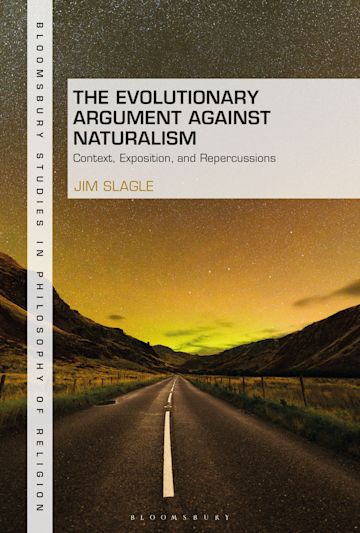
Monday, July 29, 2013

Oh joy!

Via Maverick Philosopher, I have just discovered the website of philosopher Andrew M. Bailey. Bailey is collecting all of the articles and book reviews of certain philosophers to make them available to everyone. One of his collections is nearly every publication of Alvin Plantinga. Another is the same of Peter van Inwagen. Another is David Lewis, which is exciting since I've always felt the need to have a more intimate knowledge of his philosophy. I might even put these links on the sidebar. So, much thanks to Bailey.

Friday, May 24, 2013

General Revelation and Science

One of the most frequent and consistent themes throughout the Bible is that creation and its elements reveal God's existence and nature. Numerous passages say that some of God's characteristics, such as his righteousness and faithfulness, are expressed in creation. Some say that virtually everyone has some knowledge of God, because nature overwhelmingly testifies to his existence and action. Long passages on this include Job 38-40, Psalm 104, and Acts 17:23-31. Shorter examples include Job 12:7-10; Psalm 19:1-4; Psalm 85:10-11; Psalm 97:4-6; Habakkuk 3:3; Acts 14:16-17; Romans 1:18-20; and many others. According to the entry for "Creation" in The Dictionary of Biblical Imagery:

The same view of creation that empties nature of divinity also makes it a revelation of God and leaves it filled with pointers to God. The fact that all things find their origin in the creative work of God means that everything, in some way, bears witness to the creation and is revelatory of the Creator. According to the Bible every rock and tree and creature can be said to testify of God, declare his glory and show forth his handiwork (Ps 8:1; 19:1; 104; 148). We might accurately speak of the creation as divine messenger (cf. Ps 104:3-4). (Italics added; cf. C.S. Lewis, Reflections on the Psalms, pp. 69-71)

Or as the Belgic Confession, one of the first Protestant confessions written (in 1561), puts it:

We know him by two means: First, by the creation, preservation, and government of the universe, since that universe is before our eyes like a beautiful book in which all creatures, great and small, are as letters to make us ponder the invisible things of God: his eternal power and his divinity, as the apostle Paul says in Romans 1:20. All these things are enough to convict men and to leave them without excuse. Second, he makes himself known to us more openly by his holy and divine Word, as much as we need in this life, for his glory and for the salvation of his own.

This is one aspect of what is called "general revelation", that is, revelation that is available to all people in all times (another aspect being the human conscience). This contrasts with "special revelation" which is only revealed to some people in specific times (this would include the Bible and the life of Jesus). While a handful of theologians have tried to deny the doctrine of general revelation, such as Barth and some Dutch Reformed theologians, they did not do so because of the biblical evidence, but rather because their theological systems did not allow for any knowledge of God that does not come through special revelation. Their attempts to get around the numerous biblical statements that creation does reveal the truth about God to everyone who has ever lived are extremely forced, and represent a primary weakness of their otherwise brilliant theologies.

Here are the logical steps by which creation reveals God:

1. Creation reliably testifies about itself.
2. Therefore, creation reliably testifies about itself when it shows itself to be created and ordered.
3. Therefore, we can know from creation that there is a Creator and Orderer.

Point 1 must be true in order for point 2 to be true; or conversely, if point 1 were false, then point 2 would be false as well. Creation could not reliably testify about itself when it shows itself to be created if it didn't reliably testify about itself. The former (point 2) is a sub-category of the latter (point 1). Similarly, point 2 must be true in order for point 3 to be true. If creation did not reliably show itself to be created and ordered, then our belief derived from our experience with creation that there must be a Creator and Orderer would not be valid, since it would be based on unreliable grounds.

Now, Scripture only explicitly states point 3. But point 3 presupposes point 2, and point 2 presupposes point 1. Therefore, the idea that the interaction of everything in the universe points to God presupposes that every individual element of creation can be trusted to display the truth about itself. This extends to every level of creation, and thus is true of recent scientific discoveries unknown in previous times. For example, the incredible degree of fine-tuning that the universe must have in order for life to be possible was unknown for most of human history; the space-time density, for example, must be fine-tuned to within one part in 10120 in order for any kind of physical life to exist. But the fact that this property wasn't even discovered until the 20th century doesn't mean that it doesn't show itself to come from God's hand and display his glory. In fact, the degree of complexity necessary for the occurrence of life is one of the most commonly cited evidences that the universe was made by an intelligent agent.

I should point out that this doesn't necessarily mean that we infer the existence of a Creator and Orderer from the order we find in nature. It can mean that, but it can also refer to the fact, as Alvin Plantinga points out in Warranted Christian Belief, that when we see a beautiful landscape we immediately and spontaneously form beliefs about God. Nature, then, doesn't have to function as a premise for an inference, but merely as the grounds for a belief, where "grounds" is understood simply to refer to the experience that produces the belief. In a similar way, when I see a tree in front of me, I spontaneously (i.e., non-inferentially) form the belief "There's a tree in front of me". The experience of the tree is the ground for the belief, but it does not function as the premise of an argument -- I don't infer the existence of the tree from the fact that I am experiencing it.

Part of the reason the doctrine of general revelation is interesting is because it seems to sanction physical science. Physics, chemistry, biology, and similar sciences are the systematic analysis of nature. Since nature is a revelation from God, these sciences are the systematic analysis of God's general revelation; in a similar way, theology is the systematic analysis of God's special revelation. Of course, the analyses may be flawed for any number of reasons, for both the scientist and the theologian. But this doesn't give us room to just reject them out of hand. It seems that the Christian is obligated, from the Bible itself, to accept the findings of science -- although not uncritically, of course. That's an important point: there is space for the believer to disagree with the prevailing interpretation of God's revelation, whether the interpreters are theologians or scientists. But this is an exceptional situation; it can't be appealed to in order to reject a source of revelation in its entirety.

One issue that general revelation raises is whether general revelation functions as an independent source of revelation, or whether it must be interpreted or filtered through the lens of special revelation before its testimony can be trusted. Some Christians, such as young-earth creationists, claim that the testimony of general revelation only holds when it is understood from within a biblical perspective. This is an attempt to avoid having to take contemporary science seriously by claiming that it is misinterpreting the testimony of nature.

I'll go over one of the primary texts for general revelation in order to respond to this charge: Romans 1:18-20. This passage begins with the following statement: "The wrath of God is being revealed from heaven against all the godlessness and wickedness of men who suppress the truth by their wickedness..." Some understand this last phrase to essentially overturn the doctrine of general revelation. While creation testifies to God, this knowledge is suppressed; and so whatever witness creation displays is ignored.

But what exactly is being suppressed here? Go back to the three steps by which creation bears witness: 1, it reliably testifies about itself; 2, therefore it reliably testifies about itself when it reveals itself to be created and ordered; 3, we believe in the existence and action of God because of this order. Do those who deny God's existence deny that the universe reliably presents itself to us (point 1)? Well, apart from a few philosophers and some insane people -- and yes, there is some overlap between those categories -- the answer is obviously no. Do they deny that the universe is ordered (point 2)? Well, again, apart from lunatics, philosophers, and lunatic philosophers, the answer is of course not. What they deny is that we can validly know God's existence from this order (point 3). In other words, the suppression that Romans 1:18 speaks of is not a suppression of the facts of nature, it is a suppression of the move from the facts of nature to the existence of a Creator: it is a suppression of the recognition that there must be a God. There is nothing in this passage, or any other passage in the Bible, to suggest that our observations of the universe can't be trusted to reveal the truth about the universe. Nor is there anything to suggest that most of our inferences from these observations can't be trusted. It's only when it points to God that it becomes suppressed.

The passage continues in verses 19 and 20 by stating "...since what may be known about God is plain to them [men], because God has made it plain to them. For since the creation of the world God's invisible qualities -- his eternal power and divine nature -- have been clearly seen, being understood from what has been made, so that men are without excuse."

This passage makes several claims. Since I've already used numbers, here I'll use letters:

a. The testimony of creation is available to all people at all periods of human history. This is evident from the statement that this testimony has been present “since the creation of the world.” Therefore, this witness was available to people who lived in times prior to the Bible's composition, and who had no special revelation from God; as such, it was and is available to those in post-biblical times who lived in places where they did not have access to special revelation, as well as those who live in such places today.

b. The testimony of creation is a reliable revelation of God; or, in other words, creation reveals the truth about God. This is evident from the statements that creation's testimony reveals "what may be known about God", and that it reveals "God's invisible qualities -- his eternal power and divine nature".

c. The testimony of creation is clear and understandable. This is evident from the statements that it has "been clearly seen", "understood", and "is plain to them, because God has made it plain to them".

d. God holds people responsible for their response to the testimony of creation. This is evident from the statement that they "are without excuse".

Thus, people who have never heard the gospel message and never read a Bible verse (point a) still have some true knowledge of God through his creation (point b) which communicates to them clearly and understandably (point c), and they are held accountable for their response to it (point d).

So, if people who have never received any special revelation from God are still given clear and true communication of who God is from creation and are held accountable for their response to this communication, what does it mean? It means that creation is an autonomous witness to God, and its testimony is valid independently of the Bible. It does not have to be interpreted through the lens of the Bible before it can be considered to be a valid and reliable revelation from God. The only alternative to this is simply unsound: if we deny this it could be claimed that, by not having access to special revelation, those who have not heard the gospel simply didn't have access to the right filter or lens or interpretative framework from which they could accurately interpret creation's testimony. But this contradicts the claim that creation's testimony is understandable (point c) to those who do not have special revelation (point a). Moreover, even if we ignore this for the moment, we have to remember that God is just. He would not hold people accountable for their response to something (point d) that he never gave them access to. In order for creation to be a true and trustworthy revelation to those who don't have any other revelation -- as the Bible says it is -- its validity must hold independently of the Bible.

So I think the Bible requires the believer to accept the testimony of creation, even when that testimony is a very specific article of knowledge or something only recently discovered. Since science is the systematic analysis of God's general revelation, the believer should accept the findings of science -- again, not uncritically. The believer can't say "I accept the Bible, but not science", since the requirement to accept the testimony of creation comes from the Bible.

(cross-posted at Quodlibeta)